Classic·Gothic Fiction
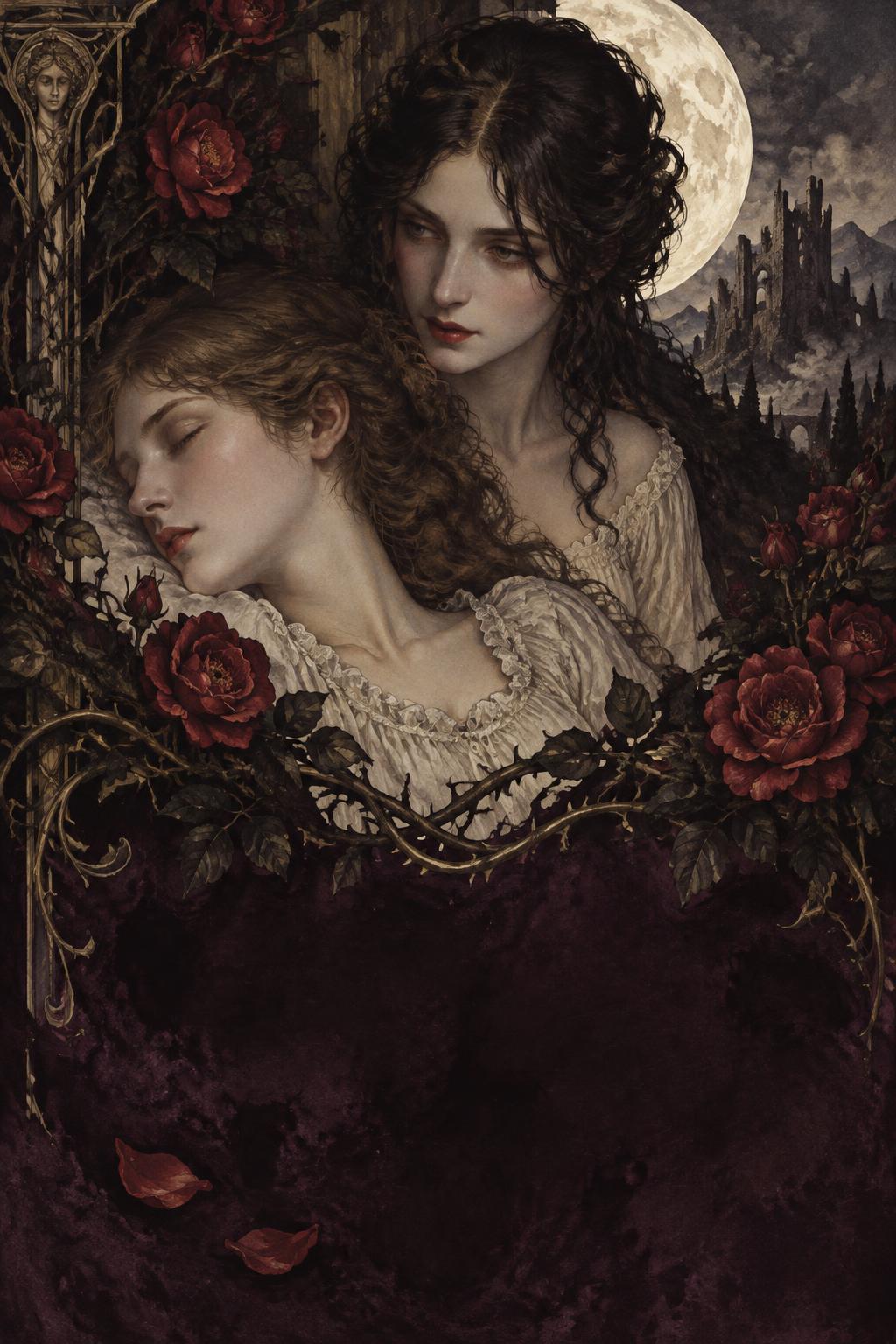
Carmilla
Joseph Sheridan Le Fanu
Before Dracula stalked London, a seductive stranger haunted an isolated Austrian castle with an intoxicating, predatory intimacy.
Shared themes:VampiresGothic horror
18 episodesDiscover

“When Count Dracula leaves the Carpathians for London, ancient terror crosses the threshold of the modern world.”
Told through journals, logs, and letters, this gothic masterpiece chronicles the chilling arrival of Count Dracula in Victorian England. From a desolate castle in Transylvania to the foggy streets of London, a small band of devoted men and women led by Professor Van Helsing wage a desperate battle against an ancient predator. Bram Stoker's seminal work remains a masterclass in psychological suspense, atmospheric dread, and the eternal struggle between light and encroaching darkness.
“Left Munich at 8:35 P. M., on 1st May, arriving at Vienna early next morning; should have arrived at 6:46, but train was an hour late.”
“I am not sleepy, and, as I am not to be called till I awake, naturally I write till sleep comes.”
““Give me the Herr’s luggage,” said the driver; and with exceeding alacrity my bags were handed out and put in the calèche.”
“I must have been asleep, for certainly if I had been fully awake I must have noticed the approach of such a remarkable place.”
“When I had done, I looked for a bell, so that I might let the servants know I had finished; but I could not find one.”
“Presently, with an excuse, he left me, asking me to put all my papers together.”
“So far as I can see, my only plan will be to keep my knowledge and my fears to myself, and my eyes open.”
“He took up the letters on the table and stamped them carefully, and then turning to me, said:—”
““My tablets! quick, my tablets! ’Tis meet that I put it down,” etc.,”
“To be sure, there were certain small evidences, such as that my clothes were folded and laid by in a manner which was not my habit.”
“As soon as I dared I ran up the winding stair, and looked out of the window, which opened south.”
““Because, dear sir, my coachman and horses are away on a mission.””
“I am longing to be with you, and by the sea, where we can talk together freely and build our castles in the air.”
“And if there is I’ll never trouble you a hair’s breadth again, but will be, if you will let me, a very faithful friend.’”
“The little river, the Esk, runs through a deep valley, which broadens out as it comes near the harbour.”
“I did not know what to say, but Lucy turned the conversation as she said, rising up:—”
““My belief is, doctor,” he said, “that he has eaten his birds, and that he just took and ate them raw!””
“A little after midnight came a strange sound from over the sea, and high overhead the air began to carry a strange, faint, hollow booming.”
“To the general disappointment, however, it was not to be found; it seems to have disappeared entirely from the town.”
“On the watch last night I saw It, like a man, tall and thin, and ghastly pale.”
“I believe we forgot everything except, of course, personal fear, and it seemed to wipe the slate clean and give us a fresh start.”
“Indeed, it might have been serious, for the skin of her throat was pierced.”
“I am to leave in the morning and go over to Jonathan, and to help to nurse him if necessary, and to bring him home.”
“Well, my dear, I got to Hull all right, and caught the boat to Hamburg, and then the train on here.”
“I have given orders to the night attendant merely to shut him in the padded room, when once he is quiet, until an hour before sunrise.”
“Then, without any seeming change, he brought the conversation gently round to his visit, and suavely said:—”
“We are hedged in with difficulties, all of us, my poor old fellow; but, please God, we shall come through them all right.”
““The brave lover, I think, deserve another kiss, which he shall have presently.””
“If our young lover should turn up unexpected, as before, no word to him.”
“Well, here I am to-night, hoping for sleep, and lying like Ophelia in the play, with “virgin crants and maiden strewments.””
“He had a ’ard, cold look and red eyes, and I took a sort of mislike to him, for it seemed as if it was ’im as they was hirritated at.”
“I feel I am dying of weakness, and have barely strength to write, but it must be done if I die in the doing.”
“I knocked gently and rang as quietly as possible, for I feared to disturb Lucy or her mother, and hoped to only bring a servant to the door.”
“Then she looked around the room, and seeing where she was, shuddered; she gave a loud cry, and put her poor thin hands before her pale face.”
“Arthur went off with him, casting back a longing look on Lucy’s face, which lay in her pillow, almost whiter than the lawn.”
“For me, I watch here in the room and in Miss Lucy’s old room all night, and I myself search for what may be.”
“A grip of the hand, the tightening of an arm over the shoulder, a sob in unison, are expressions of sympathy dear to a man’s heart.”
“All the time of the burial he was, I could see, putting some terrible restraint on himself.”
“My household work is done, so I shall take his foreign journal, and lock myself up in my room and read it....”
““He was almost recovered, but he has been greatly upset by Mr. Hawkins’s death.””
““Do you mean to tell me, friend John, that you have no suspicion as to what poor Lucy died of; not after all the hints given, not only by events, but by me?””
“Oh, my friend, why, think you, did I go so far round, why take so long to tell you so simple a thing?”
“I shrugged my shoulders, however, and rested silent, for Van Helsing had a way of going on his own road, no matter who remonstrated.”
““I want you to come with me, and to come in secret, to the churchyard at Kingstead.””
“He evidently did not know that there was a leaden coffin, or, at any rate, had not thought of it.”
“Of course, Arthur wore black, for he was in deep mourning, but the rest of us wore it by instinct.”
““I knew you from the description of poor dear Lucy; but——” She stopped suddenly, and a quick blush overspread her face.”
“When the terrible story of Lucy’s death, and—and all that followed, was done, I lay back in my chair powerless.”
“He, too, put me at once in communication with the proper officials, and I saw that their tally was correct with the original invoice.”
““Oh, very well,” he said; “let her come in, by all means; but just wait a minute till I tidy up the place.””
““Count me in, Professor,” said Mr. Quincey Morris, laconically as usual.”
“He looked at me keenly, and seeing the negative in my face, turned to the others, and scrutinised them closely.”
“But we live and learn, and in our present task we must take no chance, as my friend Quincey would say.”
“Lord Godalming lifted one of the dogs, and carrying him in, placed him on the floor.”
“My dream was very peculiar, and was almost typical of the way that waking thoughts become merged in, or continued in, dreams.”
“He is a decent, intelligent fellow, distinctly a good, reliable type of workman, and with a headpiece of his own.”
““Pardon me,” I said, with equal politeness, “but I have a special reason for wishing to know who purchased it.””
““I wonder,” I said reflectively, “what an elephant’s soul is like!””
“Let me put down with exactness all that happened, as well as I can remember it, since last I made an entry.”
““When Mrs. Harker came in to see me this afternoon she wasn’t the same; it was like tea after the teapot had been watered.””
“I could not but feel that Art was keeping back something; but, as I took it that it was with a purpose, I said nothing.”
“All, big and little, must go down; perhaps at the end the little things may teach us most.”
““Do you forget,” he said, with actually a smile, “that last night he banqueted heavily, and will sleep late?””
““The advice is good!” said Van Helsing, so we said no more.”
“Last night he was a frank, happy-looking man, with strong, youthful face, full of energy, and with dark brown hair.”
“He, rushing up the steps, crossed the flagged yard, and pushed open the stable door.”
“I must have fallen asleep, for I was awaked by Mina, who was sitting up in bed, with a startled look on her face.”
“It was his last hope, save that he might hide in the tomb that he think poor Miss Lucy, being as he thought like him, keep open to him.”
“This that we hunt from our village is a tiger, too, a man-eater, and he never cease to prowl.”
““I promise!” and as I said it I felt that from that instant a door had been shut between us.”
“To-night, when we met, she was somewhat constrained, and bore all the signs of an internal struggle.”
“Everything is pretty well fixed now, I think, to welcome the Count on his return from his tour.”
“But there comes another word from some one who speak without thought because she, too, know not what it mean—what it might mean.”
“She had risen, as if impulsively, from where she lay on the sofa, and raised both her hands, palms upwards, as if lifting a weight.”
“It is all done; poor dear, dear Jonathan, what he must have suffered, what must he be suffering now.”
“For if they did not, our little expedition could not start, either so promptly or so well equipped, as it will within another hour.”
“I am afraid to think of Jonathan, but somehow I have now no fear for him, or for myself.”
““Well,” said I to myself, “if it be that she sleep all the day, it shall also be that I do not sleep at night.””
“I tremble and tremble even yet, though till all was over, God be thanked, my nerve did stand.”
“He was deathly pale, just like a waxen image, and the red eyes glared with the horrible vindictive look which I knew too well.”
Classic·Gothic Fiction
Joseph Sheridan Le Fanu
Before Dracula stalked London, a seductive stranger haunted an isolated Austrian castle with an intoxicating, predatory intimacy.

Short Story·Urban Fantasy
Leo Marchetti
Rent in San Telmo was half price on one condition: never open the heavy curtains before dusk.
Classic·Gothic Fiction
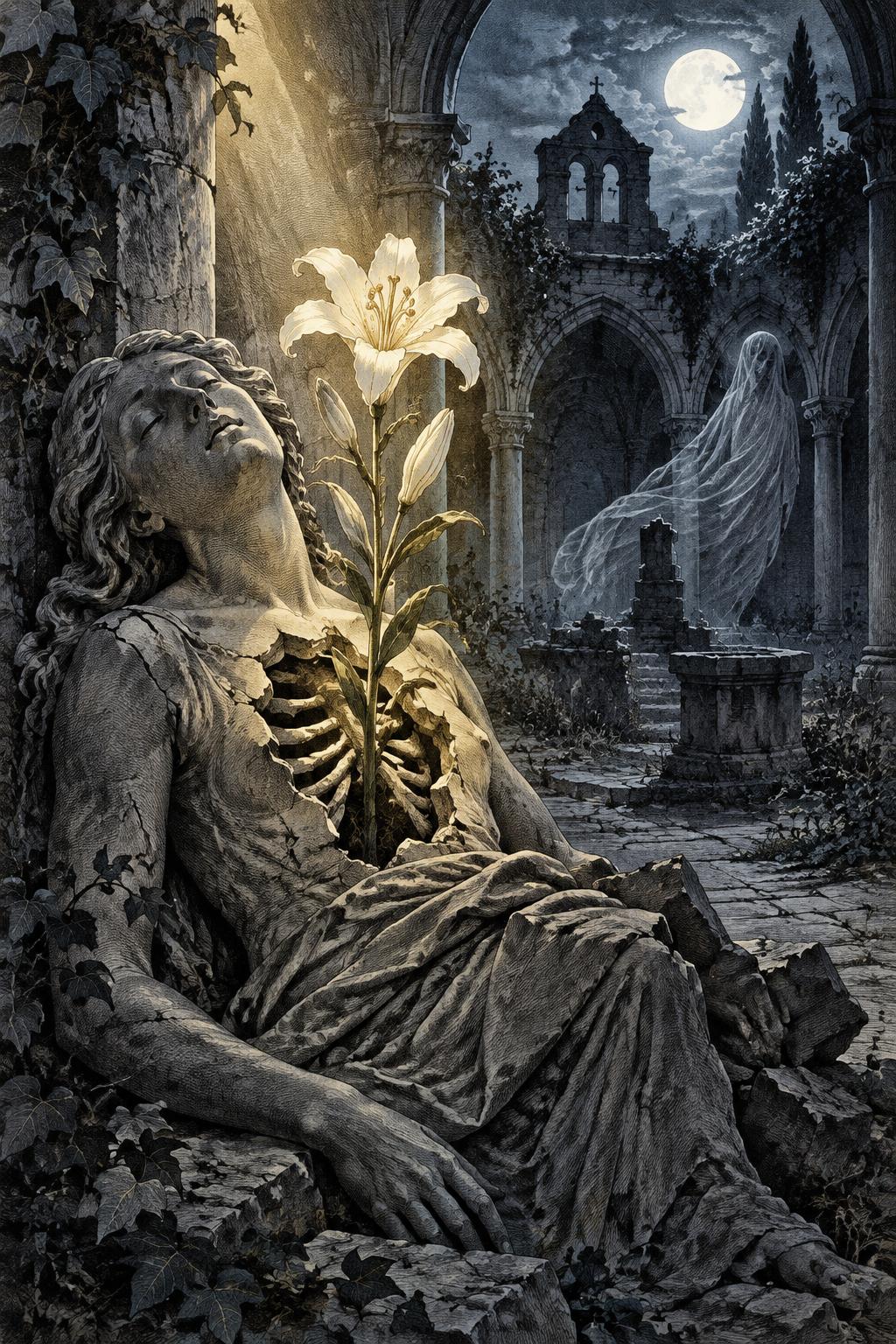
Gustavo Adolfo Bécquer
Step into the dark, haunting world of Spanish Romanticism with Gustavo Adolfo Bécquer’s legendary tales of ghosts and the supernatural.
Public-domain work (1897). Text: Project Gutenberg #345. The Spanish version is an AI-assisted translation and may contain errors. Digital edition by Inkora Stories. Learn more