
Classic·Gothic fiction
Dracula
Bram Stoker
When Count Dracula leaves the Carpathians for London, ancient terror crosses the threshold of the modern world.
Shared themes:Gothic horror
80 episodesDiscover
“A gentle young priest enters a decaying Galician estate where feudal savagery, lawlessness, and untamed instincts reign supreme.”
Sent to bring order and piety to the remote Galician manor of Don Pedro Moscoso, the frail, devout priest Father Julián expects a bastion of noble lineage. Instead, he finds the Manors of Ulloa surrendered to moral neglect, rural lawlessness, and brute passions, ruled behind the scenes by cunning servants. Striving to salvage the master's soul and elevate the ancestral house, Julián attempts to civilize the estate through a pious marriage. Yet in this oppressive, wild landscape, civilization soon proves alarmingly fragile against hereditary corruption and ancestral violence.
““The House of Ulloa is over yonder,” he murmured, stretching out his hand to point toward a spot on the horizon.”
““My uncle,” he exclaimed, folding the letter—is always so whimsical and amusing....”
“Perucho turned toward the bottle and then, as if instinctively, shook his head, swaying the dense fleece of his curls.”
“Julián awoke when a gentle, golden autumn sun was pouring fully into the room.”
“Three or four patents of nobility, all with their pendant lead seals, were set apart, wrapped in clean cloths.”
“Julián took refuge in his room, whither he made the child come up, half dragged, for the customary lesson.”
“In short, the flower of the district was gathered there, lacking only the Marquis of Ulloa, who would certainly arrive for dessert.”
““God above all!” he murmured, sighing at the thought that he would have to inhabit a town of narrow streets and encounter people at every step.”
“Am I stupid, by chance, not to see that that shameless creature flees from me, and that every day I must hunt her down like a hare?”
““The mare,” replied Primitivo without raising his voice—is not fit for the road.”
““Do you know,” insinuated Don Pedro—that my cousin Rita strikes me as somewhat light-headed?”
““Little Rita, big Rita?” replied Don Pedro, devouring her with his gaze.”
““If your mother, who is in glory, could raise her head on such a day as this!””
““I wager,” he exclaimed, laughing, “that you will pass that stone cross on the road with your rosary in hand.””
“This was why the father-in-law, despite being chronologically a generation behind his son-in-law, was morally many years ahead.”
““I know who he is,” said Don Pedro between his teeth, his brow darkening.”
““I believe...” he stammered, choking, “I believe... he belongs to Sabel, the one who is doing the cooking these days.””
“From quite nearby, the Pazo of Limioso seemed uninhabited, which heightened the melancholy impression produced by its dismantled dovecote.”
“Her black hair appeared glossier and more abundant; her eyes, less dreamy and more moist; her mouth, fresher and redder.”
“Sabel served it in person, Filomena the maid, who usually waited at table, being that day heavily occupied.”
““I find you looking remarkably well, madam,” said the chaplain, lying like a knave.”
““I trust you more than the nurse,” Nucha would say to him confidentially, giving vent to a secret maternal jealousy.”
“Not a stranger, for he lived spiritually united to the family by respect, devotion, and habit.”
““A fine thing to make such a fuss about!” exclaimed her husband, shrugging his shoulders.”
““Blessed Saint Barbara!” murmured the chaplain piously, with a shudder.”
““As God may save me and grant me glory, it is the truth!” cried Rat’s Snout, putting on the most crestfallen face in the world.”
“He sat quiet and motionless, with eyes wide open and staring, not daring to breathe, looking so handsome that one felt like devouring him.”
“Perpetual antagonists, their struggle, like that of the Roman dictators, was destined to end only with the ruin and death of one of them.”
“He well understood that Primitivo was behind the scenes; but, after all, he was the one who was incensed.”
““Go on, go on,” exclaimed the Governor, who that day was evidently irritable.”
““Wait a moment, Naya,” said he familiarly, giving him, according to the custom among priests, the name of his parish.”
“The mark, dark on the first day, gradually turned greenish and faded away.”
““Softly, softly,” exclaimed the archpriest, ready to break a lance for his dear young squire.”
“The chaplain made no reply, but a few days later, returning from Naya, he fell in with the doctor.”
““I am alone, utterly alone...” repeated Nucha, passing her hand over her cheeks.”
“Perucho’s first memory is that, leaving the chapel, he lingered sadly by the door, for that day the chaplain gave him nothing.”
“He saw the child asleep, and the nurse, face down upon Nucha’s bed, snoring heavily.”
“The stone cross, a short distance away, lifts its stone arms stained with the old gold of lichen...”
“The great burrow, defying time, remains as heavy, sombre, and forbidding as ever.”
Classic·Gothic fiction
Bram Stoker
When Count Dracula leaves the Carpathians for London, ancient terror crosses the threshold of the modern world.
Classic·Gothic Fiction
Gustavo Adolfo Bécquer
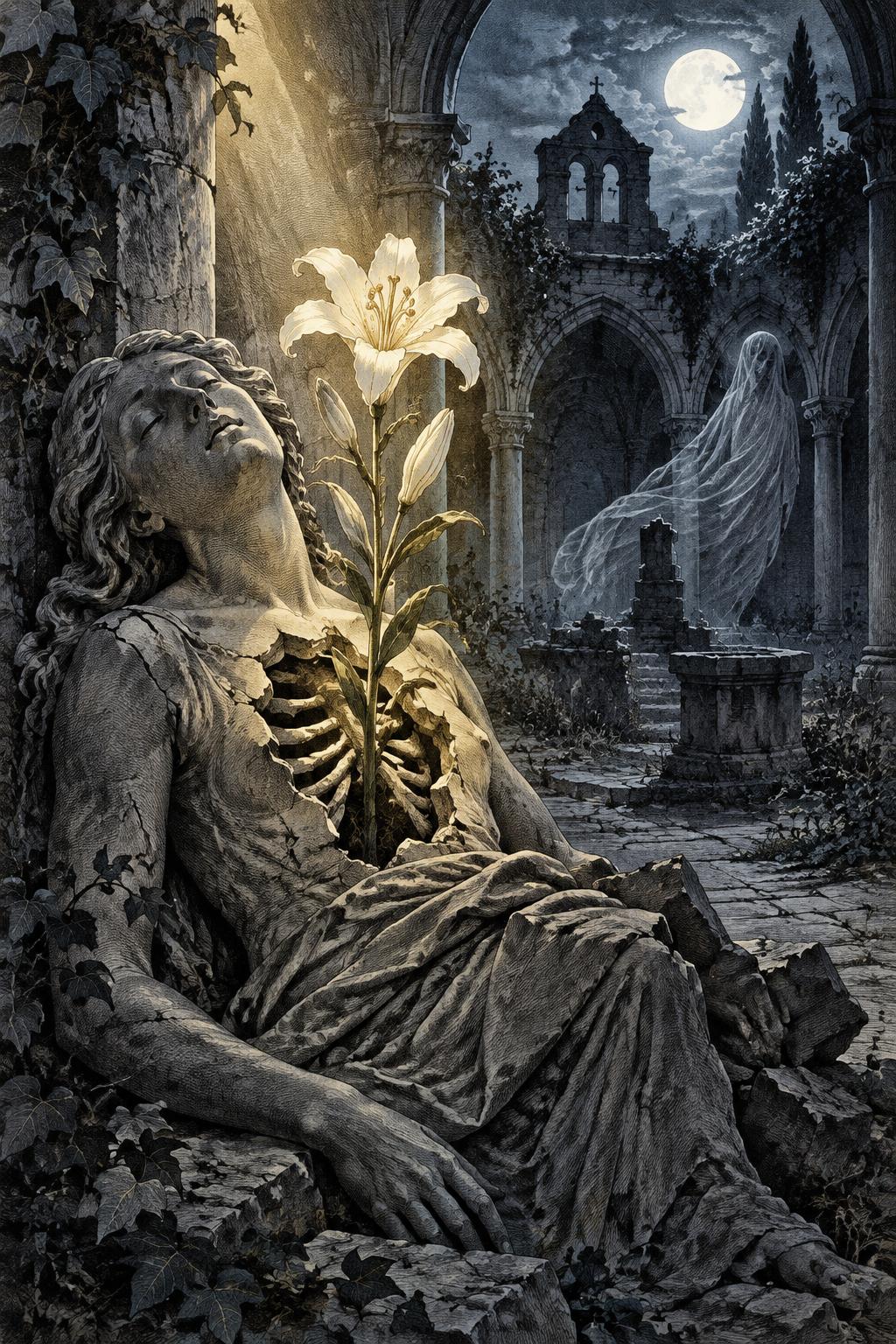
Step into the dark, haunting world of Spanish Romanticism with Gustavo Adolfo Bécquer’s legendary tales of ghosts and the supernatural.
Classic·Gothic fiction
Mary Shelley
An obsession with defying mortality gives birth to a nameless creature and unleashes an enduring nightmare of ambition and remorse.
Public-domain work (1886). Text: Project Gutenberg #18005. The English version is an AI-assisted translation and may contain errors. Digital edition by Inkora Stories. Learn more