The Last Dispatch
~4 min · 828 words
They climbed from the subterranean drift as the first pale light of dawn stained the granite buttresses of Mount Aconcagua with glacial pink. The gale had blown itself out in an instant, leaving the air so sharp and crystalline that the chuffing steam of the work train climbing from Puente del Inca carried three leagues across the valley, mingling with the screech of rack gears biting into frosted steel.
Inside the telegraph room, sounder number two had fallen silent. The final squall of the storm had severed the high summit wire, opening the line to dead space, leaving a stillness that the cast-iron stove answered with the crackle of burning mountain scrub.
Balboa stood motionless by the window, his hands shoved deep into his coat pockets, staring across the snowfields where early sunlight was beginning to melt the hoarfrost off the telegraph poles.
'We have to log this with the superintendency in Mendoza,' Balboa said quietly. 'Report the legal finding in the vault, summon the magistrate from Uspallata, and turn over the military field logs.'
Julián sat down at the lapacho table. He wired a dry lantern battery across the brass key and set his fingertips against the polished wooden knob.
He waited neither for railway directives nor the arrival of the freight train. He depressed the brass lever with the calm authority of a man who had spent six winters listening to human grief carried across copper wire. He transmitted in the old frontier cipher, with the slow, dignified cadence of border garrisons, sending the three formal acknowledgment taps and the station code for La Cumbre: Fourth Battalion dispatch received. Record entered into the master ledger. Relief watch posted at 06:00, July 18. You may dismiss the company.
He disconnected the terminals of the military circuit and slipped the carbon copy into his leather portfolio. Outside, the bronze station bell struck twice, heralding the arrival of the steam engine whose whistle cut the mountain silence with a clean, round note that startled the condors from their rocky perches.
Julián stood, grasped his ash cane, and walked toward the door. When he pulled it open, the high cordillera sun struck his face with fresh warmth, reminding him that there is no darkness so deep nor peak so high that it can forever resist the first clean light of truth.
The high morning sun flooded the telegraph office with a clarity so brilliant that Balboa had to shield his eyes after hours in the dark. Fresh powder piled along the crags refracted the light with diamond fire, while steam from the cog-wheel locomotive formed an unbroken white column rising straight into the cobalt cordillera sky.
Julián sat upright before his Remington machine, tracing his fingertips across the embossed lines of the formal transcript he had just struck into the ribbon. There was neither malice in his profile nor hesitation in his posture; only that unshakable serenity belonging to men who inhabit silence and know that justice depends not upon parade medals, but upon the quiet discipline with which truth is stamped upon the sheet.
Balboa executed his signature at the foot of the document with a hand that had ceased to tremble. The old stationmaster folded the parchment with solemn care and sealed it into an official dispatch envelope with red railway wax. He knew his family ledger would forfeit the military pension and the silver frame would be removed from the parlor mantle, yet for the first time in sixty years, his bloodline was as clean as meltwater running off the glacier.
''The train is clearing the yard switches, son,'' Balboa said quietly, resting an open palm on Julián's shoulder. ''Let's hand this ledger to the chief conductor. It is time La Cumbre became a working rail depot again, rather than a tomb of silent brass.''
When the trans-Andean rack locomotive ground to a halt beside the platform with an immense blast of steam and hot condensate, the head conductor stepped down with his leather pouch tucked under his arm, wool cap pulled low over his eyes. Catching sight of Balboa and Julián standing on the threshold with the red-waxed superintendency packet and the two folded army blankets upon the counter, he understood immediately that this was no routine winter delay.
The train's steam whistle blew again, sending a clean, round note rolling down the valley until it faded into the Uspallata gorges. Julián inhaled deeply, letting the warm coal smoke from the boiler engine fill his chest.
The morning light warmed the chilled pine planks of the station platform, burning away the overnight hoarfrost in plumes of clean white steam. Julián stood straight beside the rail tracks, his ash cane planted firmly in the gravel, listening to the iron wheels of the morning train bite into the summit cog. Behind him, in the shed, the three receivers were silent. For the first time in six years, no one would be dictating a name to him at midnight.
End of Episode 5 · of 5
The Last Dispatch
Did this episode captivate you?
Invite other readers or create a typographic quote card with your favorite lines.
Read next
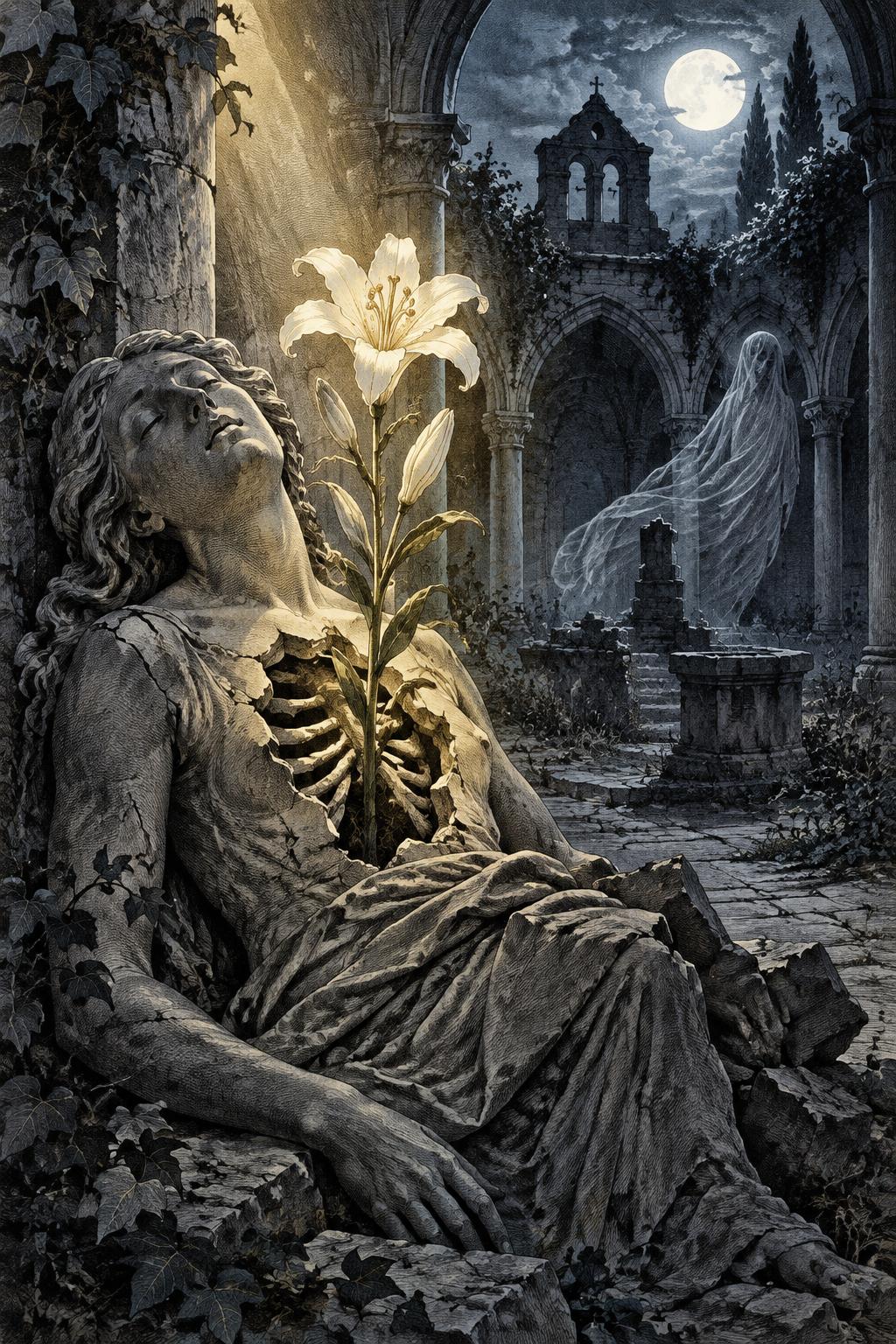
Legends
First collected in 1871, Gustavo Adolfo Bécquer’s «Legends» stand as the pinnacle of Spanish gothic and fantastic prose. This masterwork transports readers to crumbling medieval monasteries, shadowy cathedrals, and desolate landscapes where the boundary between the living and the dead dissolves. With exquisite lyrical prose, Bécquer explores the perilous depths of human obsession, unrequited passion, and spectral vengeance. Each tale opens a window into a chilling universe of ancient curses and haunting beauty that continues to captivate modern audiences.