The First Thaw Blossom
~4 min · 819 words
By six in the morning, the north wind had vanished completely.
Along the carved eaves of the bakery began a music Montecanela had not heard in three long years: a steady, crystalline patter of clear meltwater spilling into the rain barrels. The stubborn sheet ice upon the gables fractured into thin glass ribbons, unveiling dark fir shingles and emerald moss that had slept beneath the snowdrifts.
Down the granite ridges of Mount Oreb ran the first streams of mild thaw water, dissolving ancient snowbanks and carrying dried pine needles into irrigation sluices that villagers cleared with ash-wood spades. The air no longer bit at throat and chest: it smelled of black loam, sun-warmed birch bark, and that green vegetative mist heralding the stirring of winter-buried seeds.
Inside the bakehouse, the air was warm, quiet, and golden.
Elvira drew her final peel from the mouth of the oven: twelve round boules of rye and spelt, each bearing an ear-of-wheat slash scored into the crust by Alistair's steady hand. The crusts sang as they cooled upon the linen cloths, emitting that fine, crackling cadence that only experienced bakers recognize as the hallmark of flawless bake.
Alistair swept the stray flour from the linden bench and hung the bristle brush upon its peg. He walked to Elvira's side without the anxious hesitation of his first nights. His hands, once bruised and stiff from royal ink, were warm, supple, and lightly powdered with grain dust.
—The parchment burned in the embers —Alistair whispered—. The archives hold no trace of the decree. Officially, I died in the drifts of the southern pass.
—Officially, dead men do not knead four sacks of grain a day in this valley —Elvira smiled, resting her wooden peel against the brick wall.
They stood together watching the early dawn pour through the high gable window, turning the airborne flour dust into a golden, floating halo. An immense stillness settled over the room—that sacred peace that arrives only after facing down ruin without surrendering a single drop of human blood. The wall clock struck seven with a cheerful, rhythmic toll.
Down the switchbacks from the old watermill, young boys came trundling empty handbarrows, eager to haul the first sacks of newly ground meal as soon as the gorge cleared of avalanche debris. Across the square, the parish priest rang the bronze handbell three times in deliberate holiday cadence, announcing that spring prayer would be observed with church doors swung wide.
The valley was waking to a season it had nearly forgotten. The smell of thawing peat and fresh stream water mingled with the aroma of hot sourdough, filling the streets with a sweetness that drew people from their shuttered rooms to marvel at the newborn day.
Upon the walnut service counter rested willow baskets lined with homespun linen, prepared to nourish the waking parish of Montecanela. There were sweet anise rolls for the children, oat-and-walnut buns for the timber cutters, and three colossal sourdough loaves reserved for the elder herdsmen's cottages.
Alistair took a step closer. Raising his hand, his thumb gently brushed a smudge of white flour from her cheekbone. The touch was slow, warm, filled with the deep calm born of shared mornings before the hearth.
—I have no desire to journey north, Elvira —he said softly, holding his gaze—. Nor to the plains. I spent ten years penning sterile words for rulers who commanded through fear. Here, for the first time in my life, I have seen hands build something that brings people together instead of casting them out.
Elvira did not look away. She lifted her hand and covered his wrist, her fingers resting over the faded scar where the Queen's brand had once pulsed.
—Whoever learns the patience of the dough learns that love is never seized by force: it is allowed to rise until it fills the whole trough —she said, with a quiet tenderness that banished the last shadow from the scribe's heart.
Alistair smiled—a real, luminous smile that transformed his austere features. He tilted his forehead until it rested against hers, breathing the scent of sourdough, woodsmoke, and wild caraway that lived in her hair.
—Teach me the recipe for the holiday buns —he murmured against her skin.
—I will teach you every secret in the valley —Elvira answered, slipping her fingers through his—. But first we must unlatch the shutters. The entire village is waiting in the square for the first warm loaf of spring.
Across the courtyard, children laughed as they tossed crusts to the mountain finches that had returned from the southern valleys, their bright plumage flashing against the melting snowbanks.
Together they threw the heavy iron bolt and pushed the twin oak leaves wide. Upon the threshold, cradled by the radiant warmth pouring from the communal hearth, a tiny yellow coltsfoot blossom had pushed through a crevice in the granite, greeting the first sun of the newborn year.
End of Episode 5 · of 5
The First Thaw Blossom
Did this episode captivate you?
Invite other readers or create a typographic quote card with your favorite lines.
Read next
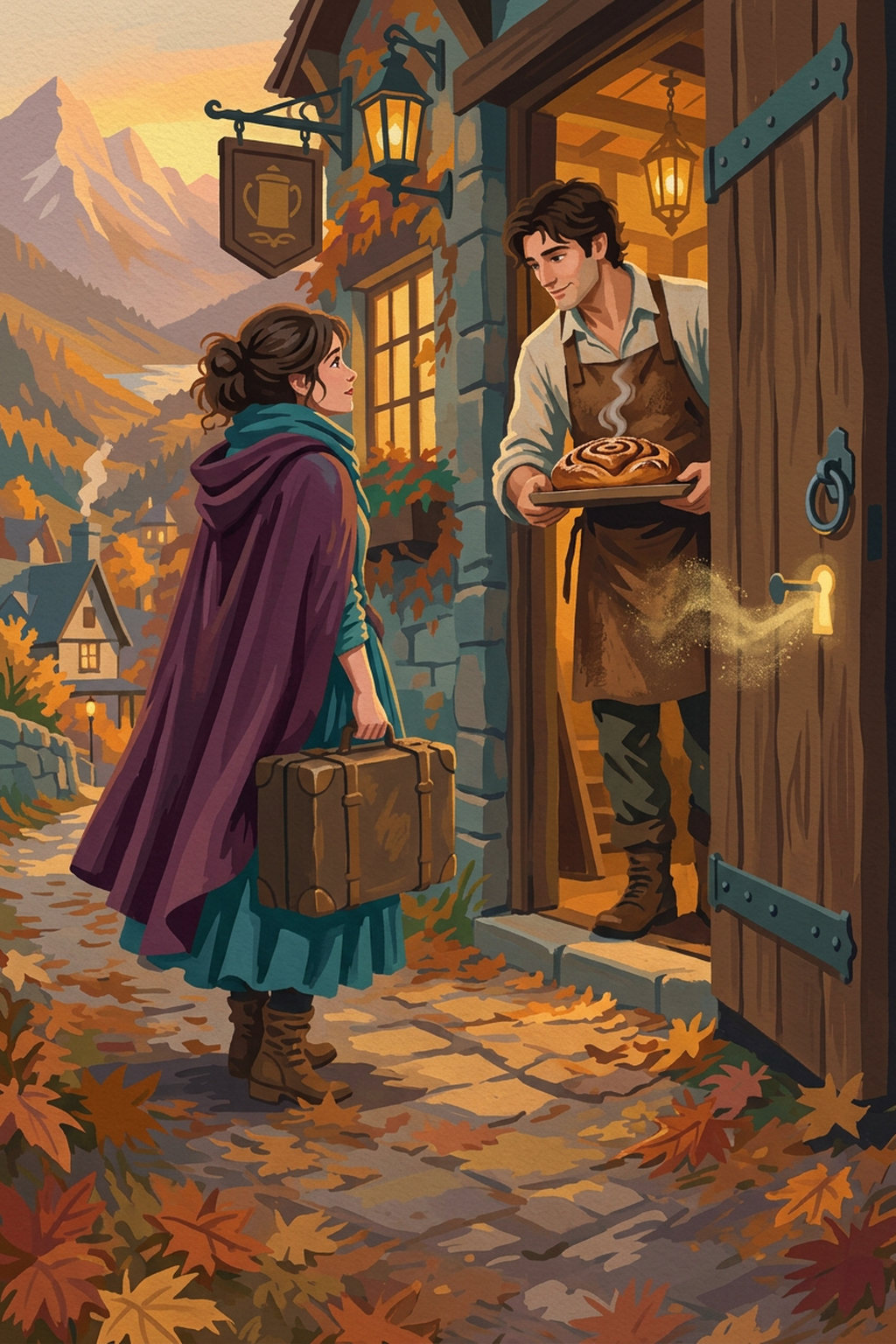
The Inn That Let You In
Clara returns to Vallehondo to sell her grandmother's inn—a living manor whose lock capriciously decides who may enter. When the heavy gate bars potential buyers and yields only to Gael, the carpenter she left behind without a word, her plans unravel. Trapped between batches of warm cinnamon and lingering resentment, they must decide whether the house will crumble or heal them together.