The Last Address of Ventisquero
~7 min · 1,451 words
Teo wedged the ash wood bar against the door leaf with a dry thud that knocked a scrap of dried moss from the lintel.
Outside, the blizzard howled against the slate drum of the clock tower, but in here the air suddenly fell still, heavy and thick, laden with that sour smell of burnt paraffin, old pine grease, and soaked wool that only high refuges have when someone comes running in.
Jimena let the bicycle drop against a pile of birch firewood. Her twins were pulling at her as if someone had sewn barbed wire underneath her skin, and when she breathed in deeply the air tasted of iron and frost, cutting the corners of her lips already chapped by the mountain pass.
"If that mule didn't break a leg, Beltrán's going to take at least three hours to get it out of the ditch," said Teo, taking off his soaked beret to shake it against his knee. "What a tumble. He was carrying the ledger tucked under his lapel and he rolled out like a bale of turnips."
"Don't laugh, Teo. He saw us."
"Of course he saw us. But seeing us is one thing and wanting to climb this heap of stones on foot in municipal leather boots is another."
He rubbed his reddened nose with the back of his mitten.
The tower shed was nothing more than a masonry box attached to the counterweight machinery, but it kept a stubby cast-iron stove with a crack sealed with refractory putty. Teo crouched down in front of the little door, felt around in a zinc box, and pulled out pine kindling and three dry pinecones. In less than a minute, the crackling of the resin brought a minimal relief, a thin line of heat that barely managed to warm their knees.
Jimena didn't take off the mail pouch from her chest. She kept it pressed against her cloth coat, feeling through the canvas the presence of the three split-needle envelopes and, further down, at the bottom of the torn lining, the flat, rectangular bulk of the letter bearing her own name.
The handmade kraft paper crackled with the cold, rough to the touch of her numb fingertips. The dark sealing wax that closed it smelled of pine pitch and old wax, a scent so sharp it almost erased the soot stench of the stove.
"Pass me the tub of grease," Teo asked without turning around, kneeling beside the rear rim of his mount. "The left brake shoe was left biting the rim on the descent from the slate quarries. If I don't wedge a leather shim in there, tomorrow we'll be going down on boot soles."
Jimena felt blindly over the carpenter's workbench, among wood shavings and loose screws, until her fingers found the dented round tin. She handed it to him.
"Here."
"It's got shavings inside," he grumbled, cleaning the threads with his thumbnail. "Your grandfather used this for everything. For the chain, for the hinges, and to smear on Adela's mule's hooves."
"It worked."
"I didn't say it didn't work. Only that he was sloppy with the lids."
Silence settled in again, broken only by the crackle of the cast iron expanding and the methodical rubbing of the rag with which Teo smeared the cable tensioner. Jimena finally took the envelope out of her inner pocket. Her grandfather's slanted handwriting stood out against the coarse paper with a firmness that seemed alien to the storm battering the boards.
She resisted breaking the seal. There was something almost sacrilegious in breaking that final border while the stove iron was still crackling for lack of draft.
"Aren't you going to open it?" Teo asked, looking up with a wrench between his teeth.
"I don't know."
"Jimena."
"Tell me."
"If he left it in the lining, it wasn't so you could air it out on a stroll to the summit."
"I know that."
She kept staring at the dark wax. A small sliver of the seal came off under her index finger, falling into her lap like a scale of dry bark.
Teo filled a dented tin cup with water from a cauldron he had just put to boil on the stove top, throwing in a handful of crushed juniper needles that perfumed the air with a balsamic and harsh vapor.
He handed her the cup, careful to hold it by the upper rim so as not to burn himself.
"Drink first. Your lips are blue."
Jimena took the metal between both hands. The heat pierced the wool of her worn gloves, suddenly giving her back the sensation of having ten fingers on her extremities.
"Adela wasn't alone in the forge," she said in a low voice, watching the milky vapor rise toward the roof beams. "When they pulled the letter from the wicket, the creak of a high-shaft boot could be heard. A boot with hardware, not farm boots. Like the ones the high mine foremen wear."
"Those cabins have been closed since the November snows," Teo replied, blowing on the rim of the can before taking a sip. "Or so says the notice Beltrán nailed to the tavern. According to him, up there there's no one left to take even a death notice to."
"Well, he lied. Or they're paying him not to climb up."
"Beltrán doesn't climb anywhere if he has to push the mule himself. He's one of those who prefer to wait downstairs with the municipal stamp and collect the toll fee."
Teo put the cup on the floor, between the two of them, on a clean slate slab. The vapor rose in a lazy spiral that unraveled against the orange glow of the stove cracks.
"My uncle used to say people in the valley go crazy when the telegraph gets cut off," he remarked, rubbing his soot-stained knuckles against his canvas apron. "They think the world stops because the wire with grain prices doesn't arrive. Then they see the snow keeps falling just the same and the rush passes."
Jimena looked at him. Teo had a smudge of black grease near his cheekbone and his eyes brightened by the smoke escaping from the chimney joint.
She said nothing.
She took a long sip. The juniper scratched her throat, bitter and comforting at the same time, returning the pulse to her temples.
Outside, the wind subsided a notch, passing from a dull roar to a long whistle that came down caressing the roof slabs.
Dawn brought a dense, milky clarity that filtered through the cracks in the timbers.
The fire had burned down to a crust of gray embers that barely warmed the air half a meter off the floor. Teo dozed sitting on a bale of old straw, with his coat zipped up to his ears and his arms crossed over his chest, breathing with a rhythmic and calm whistle.
Jimena got up without making a sound. The muscle ache had settled into a dull stiffness, but the trembling in her hands had disappeared.
She held her grandfather's envelope up to the ash-gray light coming through the high wicket.
She pressed her thumb under the edge of the dark wax. The resin, brittle from the night's freeze, gave way with a dry snap that immediately smelled of turpentine and closed forest.
She unfolded the handmade kraft paper.
There was no whole sheet. There were no long farewells or solemn advice about the trade or the winter. Only a hand-torn strip, with the iron-gall ink still bright and dark over the hemp fibers, containing two tight lines alone:
Ventisquero never needed to be saved from the snow, but rather for someone not to dare put out the upstairs windows. Follow the trail of cut firewood.
Jimena folded the paper slowly and slipped it into her vest pocket, right over her chest.
She walked toward the fixed-gear bicycle leaning against the logs. She took the mail pouch, opened the waxed flap wide, and hung it from the iron handlebars, letting the open leather breathe the morning frost.
Then she slid back the ash bar and pushed the wooden door just a handspan, leaving it ajar so the first bluish light of dawn could bathe the threshold.
"Teo," she said, without turning. "There are people up there. Someone is cutting firewood for three houses."
Teo opened one eye, looked at her, looked at the open pouch hanging from the handlebars, and began lacing his boots without asking a single question.
They climbed to the Wolf's Gully with three black-sealed envelopes and one open letter. By noon, for the first time in thirty years, smoke was rising from all three chimneys at once.
End of Episode 4 · of 4
The Last Address of Ventisquero
Did this episode captivate you?
Invite other readers or create a typographic quote card with your favorite lines.
Read next
The Inn That Let You In
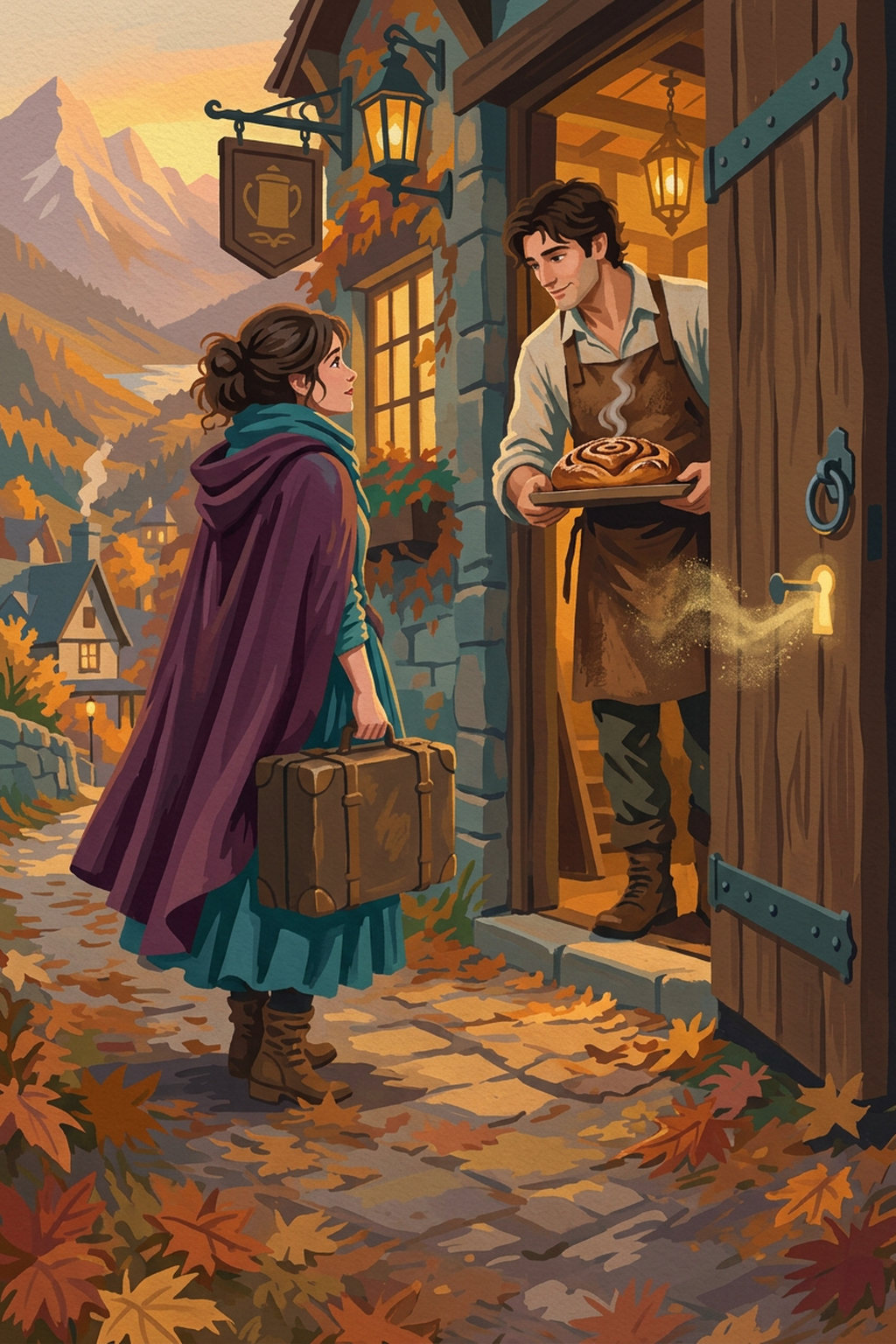
Clara returns to Vallehondo to sell her grandmother's inn—a living manor whose lock capriciously decides who may enter. When the heavy gate bars potential buyers and yields only to Gael, the carpenter she left behind without a word, her plans unravel. Trapped between batches of warm cinnamon and lingering resentment, they must decide whether the house will crumble or heal them together.