Warm Bread at Six
~4 min · 755 words
On Saturday morning the queue outside La Espiga Dorada was unlike the usual rush of hurried office workers and scooter couriers. News had rippled through the neighborhood from porch to porch without the help of social media or billboard banners: Mateo was kneading dough behind the open front counter, and an acoustic guitar rested against the wicker basket of guava pastries. When the bells of San José de El Poblado struck six, the boy set his rolling pin upon the floured bench, wiped his palms on his apron, and picked up the instrument without checking whether smartphone cameras were pointed in his face.
The shop smelled of unpretentious earthly bliss: roasted butter, spiced guava paste bubbling in sheet pans, and dark mountain coffee dripping through a traditional cloth colander held by Doña Socorro. More than fifty residents stood gathered beneath the tile eaves and along the opposite sidewalk: retired men in Aguadas straw hats, high schoolers balancing notebooks against their hips, and neighborhood matriarchs carrying woven shopping baskets. No one jostled or spoke above a hush; each person understood they were witnessing a quiet sanctuary that no illuminated mobile screen could ever faithfully translate.
He sang without amplification or backing tracks, his raw acoustic voice filling the room, letting the melody bounce off whitewashed walls and jars of blackberry preserves. He sang neither in Korean nor with the breathy vocal tricks drilled into him in Gangnam training rooms. He sang a plain, unadorned song about rain drumming on clay tiles in Envigado, about the scent of fresh drip coffee and returning home after touching the bottom of the coldest winter on earth. The crowd fell into reverent stillness; Doña Socorro dabbed her eyes with the fringe of her wool shawl, and Don Hernando handed out piping-hot rolls in brown paper sacks with a smile stretching across his weathered face.
I stood in the doorway holding a bundle of white night-blooming jasmine. As the final chord decayed and the neighbors' applause washed down the street, Mateo looked up and sought my gaze through the doorway. All traces of fear and submissive posture had vanished from his frame; the surgical scar on his wrist remained, yet it was no longer a badge of humiliation but proof of a trial he had outlasted without surrendering his spirit.
That afternoon we stacked the cardboard folders holding the non-disclosure threats and penalty clauses into the cold hearth of the brick oven, using them as kindling for Sunday's pre-dawn bake. As the ashes of legal seals drifted up the flue toward the high blue Medellín sky, Mateo sat beside me on the curb outside the flower shop, breaking a steaming cheese roll in two. The rest of the world could keep hunting for manufactured perfection on illuminated glass screens; we had all we needed in the scent of warm bread, clean mountain rain, and a melody no contract could ever strip away.
The steep avenue of El Poblado shone clean and radiant beneath the crisp morning sun. The sidewalks were packed with neighbors clapping with unfeigned warmth—the kind of spontaneous affection no digital marketing blitz or bot-farm stream counter could ever manufacture. Don Hernando continued passing out piping rolls wrapped in brown paper, dabbing his eyes with his flannel cuff, while Doña Socorro embraced long-time customers as if her boy had returned unscathed from an overseas war. I stepped beside Mateo as the crowd began slowly drifting toward their morning chores. He carried the nylon-string guitar slung over one shoulder, and the serene certainty in his eyes reaffirmed that genuine artistry is never snuffed out; it merely requires returning to native soil to flourish again. He caught my hand in his, warm from the ambient heat of the ovens, and I knew that the most perilous trial of his life had not been traversing an ocean, but discovering that real joy was never tallied in the applause of strangers.
When the midday sun began to warm the paving stones, La Espiga Dorada had sold its last cheese bread. Don Hernando shut off the burners and came out to sit with us under the eaves, still in his apron. For a while nobody said anything. Mateo took the guitar out of its case, tuned the soft-wire string he hadn't played in five years, and started the ballad he used to improvise in the cafeteria queue at school, the one he always got wrong in the same bar. This time he hit the note. He waited for me to laugh anyway. I laughed.
End of Episode 5 · of 5
Warm Bread at Six
Did this episode captivate you?
Invite other readers or create a typographic quote card with your favorite lines.
Read next
A Fake Boyfriend in Cartagena
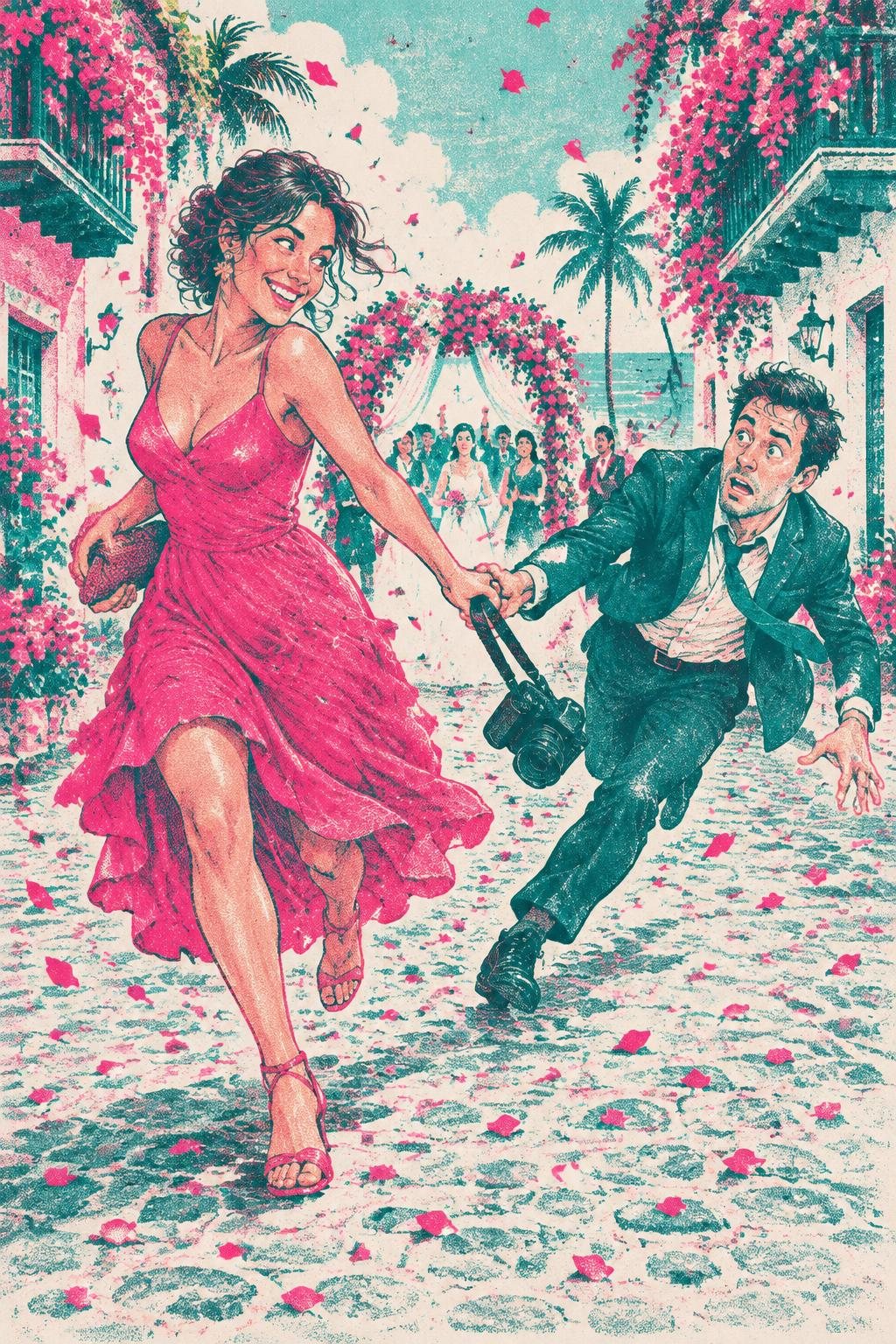
Desperate to dodge her loud family's relentless questions at the society wedding of the year in Cartagena, Manuela invents a serious boyfriend. Her nightmare begins when her only available accomplice turns out to be Rodrigo—the event's official photographer and the very boy who shattered her heart back in high school. Amid gossipy aunts, sweltering heat, and stolen glances through the camera lens, keeping up the charade threatens to reopen old wounds or ignite an irresistible disaster.