December Honey
~4 min · 828 words
They descended from the bluffs as dawn broke, when the first ribbons of lilac and morning gold filtered between snow-clad peaks of Montecanela. The chill across the valley floor was so keen that every breath plumed white like black powder smoke. Lucas carried upon his shoulders the copper boiler secured with waxed canvas swaddling, minding every footstep upon the frozen shale, while Celia led the descent through the steep cobbled alleys toward the southern conservatories.
The grand municipal glasshouse loomed like a stranded galleon in the river mist. Its three domes of wrought iron and leaded glass rattled under the northerly squalls, and through thirty fractured panes whistled the sinister draft that threatened rows of fragile winter seedlings.
"You arrive at the critical hour, Celia," shouted elder gardener Martín, who was laboring to shelter root stock beneath fraying burlap blankets amid ragged coughs. "The wall thermometer indicates one degree below freezing. If we fail to caulk those breaches within the half-hour, black frost will wither our gentian and poppy beds before the sun clears the crest."
"Nothing will wither today, Martín," Celia replied with a crisp authority that instantly steadied the anxious greenhouse crew of twelve gardeners. "Bring charcoal braziers, dry wiping rags, and brass spatulas. We bear the high ridge wax."
Lucas lowered the boiler upon a forged trivet. The wax, maintained at precise temperature above embers, flowed with the golden viscosity of heavy clover syrup. Dipping a wide palette knife, Lucas drew a generous amber rib and set it along the exterior stone mullion. Celia, stationed on the inside of the frosty pane, smoothed the seam with a heated bevel iron, binding the lead and glass into an unbroken, immaculate seal.
They labored without pause through three feverish hours, without traded reproaches or wasted motion, moving in instinctive concert as though they had executed this exact choreography for a decade against winter's assault. The molten wax cured rapidly upon meeting the icy glass, creating an elastic, watertight bead that breathed a fragrant aroma of wild thyme, mountain chamomile, and summer ridge sunshine.
"No winter frost can ever shatter glass when the hands that seal it work in shared rhythm. Look how it seats, Lucas. Not even the fiercest gale will dislodge this seal."
"I know it," he murmured through the translucent glass, his crooked smile softening his features as he burnished the edge with his thumb. "That is the virtue of sun-wax gathered from unchained bees: it knows how to shoulder winter's weight without snapping."
By eight in the morning, as the first December sun struck the iron ribs of the domes, the last crack was sealed. Inside the glasshouse the air rose at once to fifty-four degrees. The gentian shoots, saved from the frost, lifted their leaves to the dawn light and filled all three galleries with a warm smell of wet earth.
The magistrate of Montecanela and two council aldermen arrived before noon, accompanied by Maya, who carried a wicker basket laden with steaming spelt loaves from her shop to comfort the shivering crew.
"Mistress Celia," the magistrate proclaimed, marveling at the leaded arches gleaming like amber jewels in the winter sun. "Our householders feared we should have to shutter the parish dispensary this season and purchase medicines at extortionate rates from coastal traders. The council has unanimously voted a warrant of five hundred silver reales to acquire this harvest and endow the municipal apiary."
Celia looked across the aisle to Lucas, who leaned quietly against the potting bench, hands tucked into his breeches pockets and linen smock flecked with gold propolis and pine shavings.
"The honor does not belong to my office, Master Magistrate," Celia announced in a voice that rang through the glass gallery. "It belongs solely to Master Apiarist Lucas Arnau. And if this council desires to secure the future of our medicinal flora and the health of the borough, I move that we establish the office of High Warden of the Valley Apiaries, holding joint seat upon the high heath and within this conservatory."
The aldermen nodded with vigorous approval while gardeners pounded hoe handles against the flagstones in applause. Lucas looked at Celia with a blend of disbelief and tenderness that drew an affectionate smile from Maya by the door.
"I accept the commission," Lucas said, stepping forward to clasp the magistrate's hand, "upon a solitary condition: that the Master Botanist be required to ascend the high bluffs once each week to inspect the hives and check the frames."
"Duty is duty, Master Warden," Celia replied with a teasing sparkle dancing in her dark eyes. "I shall simply have to reconcile myself to bee stings and thyme smoke."
Seated upon the stone garden bench beneath the gentle solstice sun, they broke warm spelt bread spread thick with the golden comb of the late harvest. In the sweet hush of Montecanela, winter had officially claimed the mountains, but between them, spring was no longer a distant promise.
End of Episode 4 · of 4
December Honey
Did this episode captivate you?
Invite other readers or create a typographic quote card with your favorite lines.
Read next
The Secret of the Golden Flour
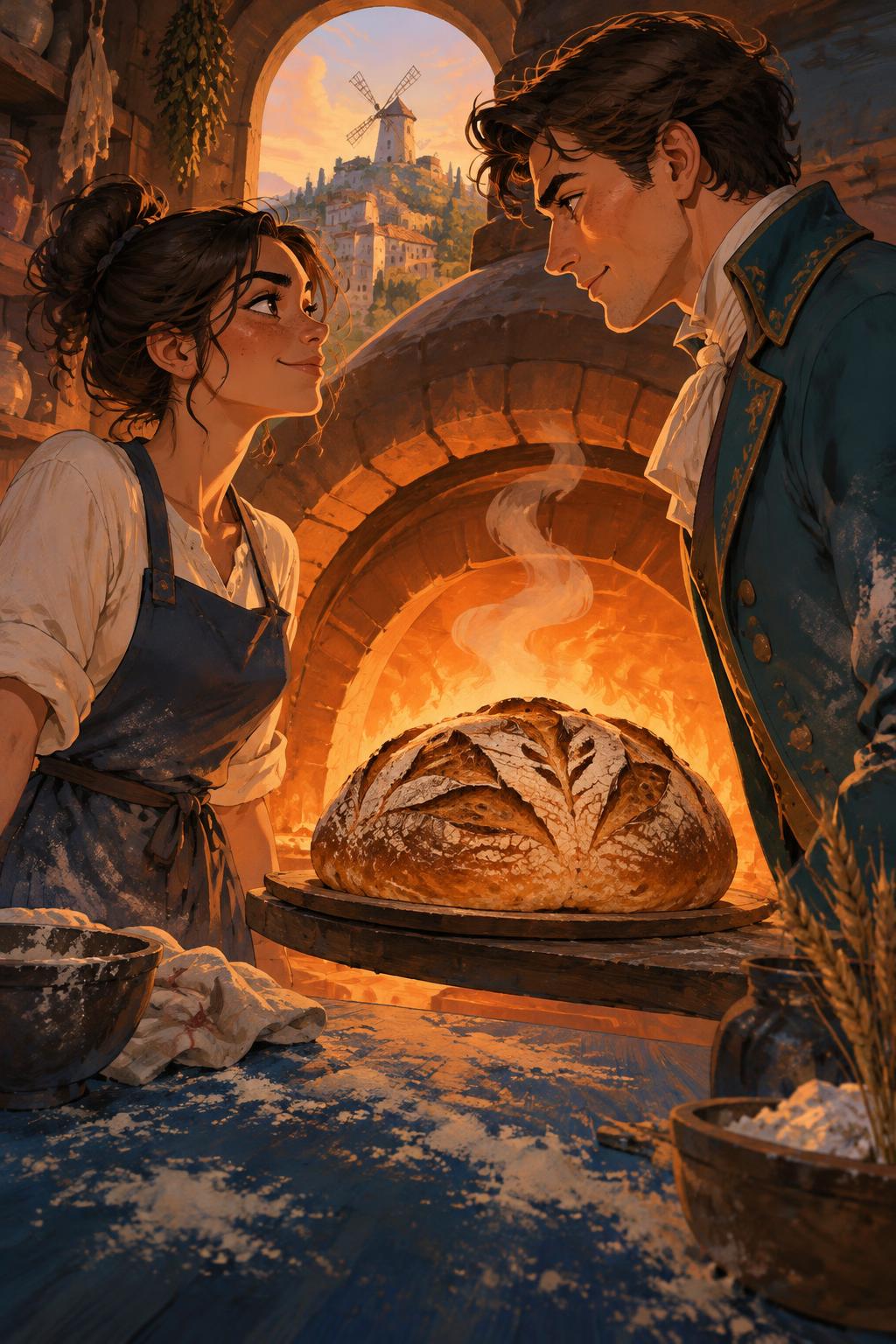
In the hillside town of Montecanela, Maya tends the valley's oldest bakery, where every hearth loaf drawn at dawn soothes the grudges of all who taste it—thanks to a living starter passed down from her grandmother. When the royal steward dispatches Eric, a brisk and methodical auditor convinced that domestic enchantment is tax evasion, the ancestral kitchen turns into a battlefield of cutting remarks, pre-dawn dough kneading, and shared warm pastries. Yet when the crown moves to shutter the town mill and seize the valley's heirloom grain, Maya and Eric must choose between ledger duties and the quiet warmth rising between them like slow-proved bread.