The Nightshade Archive
~16 min · 3,161 words
The city outside Sarah Jenkins’s window was a blurred tapestry of rushing lights, a steady hum that, to most, meant the relentless turning of existence. To Sarah, it was nothing more than white noise, a distant heartbeat against the glass of her meticulously ordered life. She sat, as she did every night, in the soft halo of her monitor; the click of her mechanical keyboard was a rhythmic counterpoint to the gentle hum of her PC fans. The scent of cooled Earl Grey tea, long forgotten in her ceramic mug, mingled with the faint metallic touch of ozone from the electronic components. This was her sanctuary, her command center, the heart of the Nightshade Archive.
By day, Sarah navigated the intricate datasets of a financial analysis firm, a world of cold logic and even colder numbers, where human variables were reduced to algorithms and projections. Her mind, a finely tuned pattern-recognition instrument, thrived on precision, on the absolute certainty of verifiable data. But it was in the twilight hours, when the city settled into its nocturnal rhythm and the demands of office hours receded, that Sarah truly came alive. She would strip away the corporate armor, the sensible shoes, the polite yet distant professional demeanor, and slip into the skin of the archivist, the curator, the high priestess of a digital temple dedicated to a forgotten god.
Nightshade was not simply an obscure 90s cult series; it was a universe. Twenty-two episodes, each a patiently crafted descent into the gothic, the arcane, the psychological horror that, for a brief moment, captivated a small and fiercely loyal audience before being unceremoniously canceled. It was a show ahead of its time; its existential dread and brooding cinematography stood in sharp contrast to the sugar-coated sitcoms and procedural dramas that dominated the airwaves. It followed the enigmatic Dr. Elias Thorne, a solitary botanist with a haunted past, as he uncovered dark secrets woven into the very fabric of nature—secrets that often manifested as grotesque, beautiful, and absolutely terrifying botanical anomalies. And at the center of it all, a flickering, incandescent star: Valerie Marsh, who played the ethereal and tragically doomed protagonist, Iris, Thorne’s research assistant and a woman seemingly more connected to the plant world than to the human one.
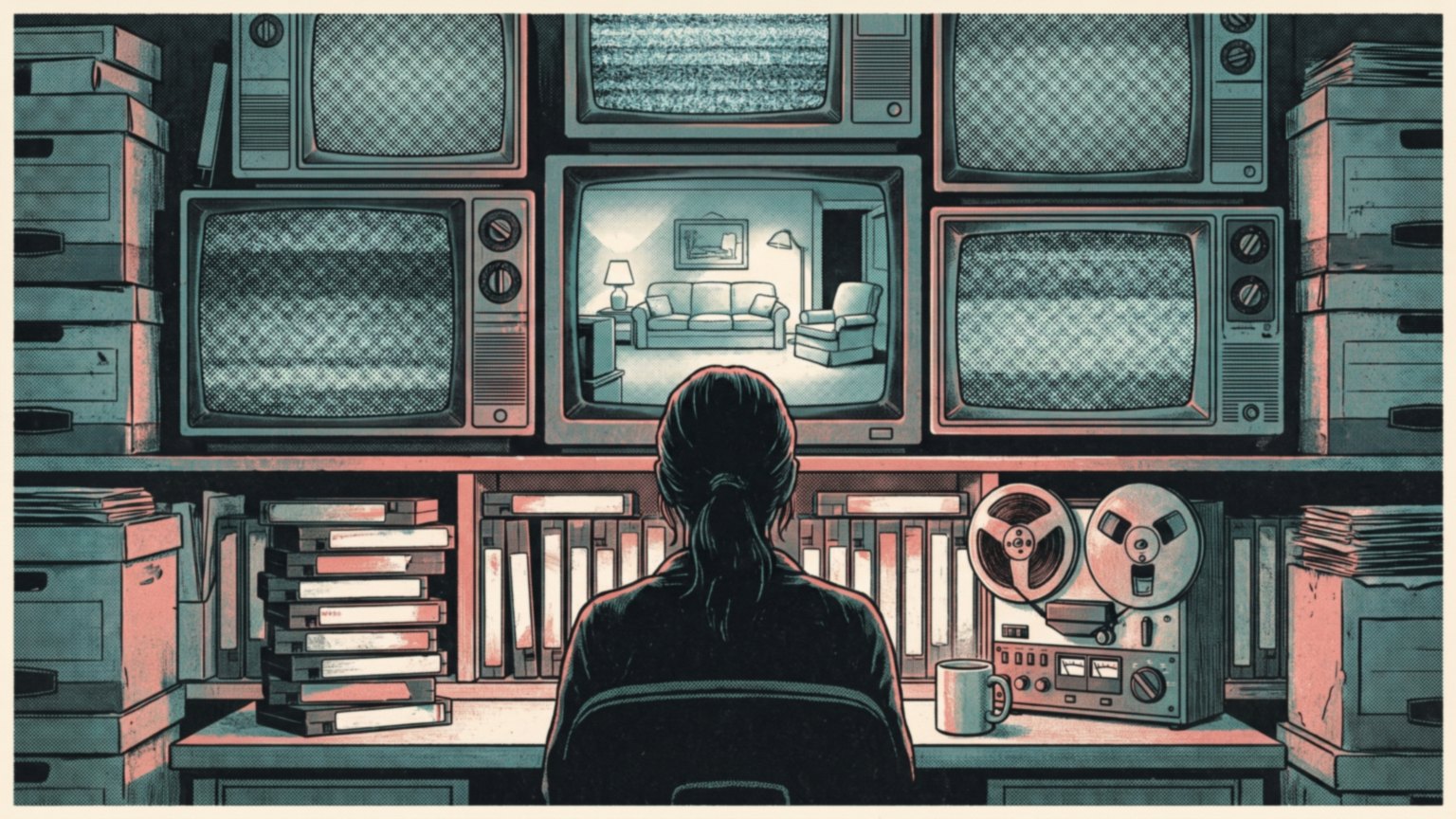
The Nightshade Archive was Sarah’s life’s work, an expansive digital monument built brick by brick, fact by fact, through cross-references. It wasn’t a simple fan site; it was an academic pursuit, a forensic examination. Every line of dialogue, every prop, every fleeting shot of a background extra, every piece of promotional material, every interview, every rumor: all meticulously cataloged, indexed, referenced, and annotated. It was proof of the power of obsession, a mirror reflecting Sarah’s own need for order, for understanding, for absolute knowledge in a world that often felt chaotic and unknowable.
Her fingers danced across the keyboard, a familiar ballet. She was currently refining the metadata for episode 17, “The Belladonna Bloom”. Specifically, a fleeting shot of a chipped porcelain teacup in the background of Dr. Thorne’s study. The Archive already recorded its appearance, its color (faded pink), its estimated era (late Victorian era), and its brief screen time (2.3 seconds). Sarah, however, had spent the past two weeks tracing its provenance. Through a deep dive into mid-90s prop inventories, cross-referencing production notes (some obtained via remarkably persistent FOIA requests to defunct production companies), and even examining blurry behind-the-scenes photographs from a long-abandoned Geocities fan page, she had finally identified it: a genuine piece of Royal Doulton, pattern “The Rose of Sharon,” circa 1898. Not just any teacup, but that teacup.
She added the new data point to the Archive entry, a quiet satisfaction blooming in her chest. It was the thrill of the chase, the silent triumph of discovery. This wasn’t just trivia; it was truth. It was the filling of a void, the completion of a puzzle that, to Sarah, felt deeply important. Other fans, casual amateurs, might overlook such details, but Sarah understood their significance. Every element, no matter how minor, contributed to the intricate fabric of the series, to its immersive atmosphere, to its disturbing realism. And through these details, she felt she understood Nightshade—and by extension, Valerie Marsh—on a level no one else could.
Valerie Marsh. The name itself was a whisper in the annals of forgotten fame. She had been the ephemeral heart of the series; her portrayal of Iris was a masterclass in contained intensity. Her eyes, large and luminous, held a sadness that seemed to precede her, a silent madness hinting at depths no one could fathom. And then, just as abruptly as she had appeared, she vanished. After Nightshade was canceled, Marsh simply… retreated. No big movies, no talk show appearances, no tell-all interviews. A few obscure theater roles, a rumored indie film that never saw the light of day, and then silence. A ghost, leaving behind only the distant echoes of her performance.
To Sarah, Valerie’s disappearance was not a mystery to be solved, but a solitary nature to be understood. She saw in Valerie a kindred spirit, a soul perhaps overwhelmed by the clamor of the world, retreating into the sacred stillness of her own being. Sarah also felt the subtle weight of human interaction, the energy drain of forced smiles and small talk. Her professional life, while intellectually stimulating, was a constant performance of normalcy, a carefully constructed facade. But here, beneath the glow of her monitor, surrounded by the perfectly ordered chaos of Nightshade, she could be absolute and authentically herself. She understood the siren song of solitude, the profound peace found in the absence of external demands. She believed, with a conviction bordering on the spiritual, that Valerie Marsh was not a victim of circumstances, but a master of self-preservation. And Sarah, in her own way, was doing the same.
The Nightshade Archive was more than a hobby; it was a philosophy. Its homepage, designed by Sarah herself with a minimalist aesthetic, was a portal to a forgotten world. A deep forest green background, subtly textured like ancient parchment, framed crisp white text. The navigation bar was intuitive, categorizing information by Episode, Character, Lore, Production, and Fan Contributions. Sarah’s personal pride was the “Valerie Marsh Timeline,” an exhaustive chronology spanning decades of every verifiable sighting, credit, and mention of the elusive actress, patiently cross-referenced with public records and obscure fan forum posts. It was a sparse timeline, punctuated by vast, empty stretches of silence, which Sarah interpreted not as absence, but as a profound presence: Valerie, living her life on her own terms, far from the maddening crowd.
Tonight, after the teacup detail, she moved to the “Fan Contributions” section. She had a backlog of submissions to review. Most were trivial: blurry screenshots, recycled theories, poorly written fan fiction. Sarah maintained strict standards. The Archive was for verifiable facts, well-reasoned theories backed by textual evidence, or genuinely insightful analytical essays. No baseless rumors. No personal attacks. No uncritical hero worship. Even Valerie Marsh, her idol, was subject to the same rigorous scrutiny within the sacred digital halls of the Archive.
She opened the first submission. It was an speculative piece on the meaning of the recurring “Nightshade Moth” motif throughout the series. The author, a user named “EliasThorne_Reborn,” argued that the moth was a symbol of transformation, not decay, and that Iris’s ultimate fate was one of transcendence rather than a tragic disappearance. Sarah read it with a critical eye, her internal logic circuits humming. The argument was well constructed, citing specific scenes and dialogue. It didn’t quite align with her own interpretation of the ending, which leaned more toward a tragic, cyclical despair, but it was clever. She typed an polite yet firm response, asking the author to strengthen their textual evidence from episodes 19 and 20, where the moth was depicted in a more ambiguous light. She pressed “Send.”
The second submission was a forum post from a user claiming to have spotted Valerie Marsh in a small bookstore in rural Oregon. “She looked older, but it was definitely her,” the post read, accompanied by a grainy, zoomed-in photo of a woman with her back to the camera, wearing a wide-brimmed hat. Sarah sighed. This was typical. Every few months, a new “Valerie sighting” surfaced, usually accompanied by equally unconvincing photographic evidence. She opened her internal database of “Unverified Sightings,” a separate private archive where she recorded these reports. This one, like the others, would be noted, dated, and then filed away, awaiting corroboration that would almost certainly never arrive. The Archive was about truth, and truth required evidence.
She spent the next hour updating her internal metrics for the Archive: unique visitors per day, most visited pages, search queries. The numbers were modest, but consistent. Nightshade might be obscure, but its small community was fiercely loyal, proof that the series was still alive. Sarah wasn’t interested in viral fame; she was interested in preservation, in digging deeper into the well of knowledge.
Her gaze drifted to a framed poster on the wall next to her desk. It was the original promotional art for Nightshade: a stylized image of a thorny vine wrapping around the silhouette of a woman, her face obscured by shadow, but the delicate curve of her neck, the tilt of her head, unmistakably Iris. Unmistakably Valerie. Her heart gave a soft, familiar beat.
It wasn’t just the series that captivated Sarah, but the deep human need it seemed to satisfy in her. In the chaos of her childhood, marked by an emotionally absent father and a mother who retreated into the silent world of her garden, Sarah had often felt adrift. She was an only child and, while her parents weren’t cruel, they were deeply absorbed in their own affairs, leaving Sarah to forge her own path through the bewildering landscape of adolescence. She found comfort in patterns, in logic, in the predictable outcomes of numbers. And then, one rainy afternoon, she stumbled upon a dusty box of VHS tapes at a garage sale. Nightshade, she remembered, had been one of them.
From the strange opening bars of the theme music, Sarah was hooked. The series offered an escape, certainly, but more than that, it offered a kind of structure, a hidden order beneath the superficial chaos. Dr. Thorne’s quest to understand the malevolent beauty of the natural world mirrored Sarah’s fledgling desire to dissect, analyze, and understand. And in Iris, Valerie Marsh had created a character that seemed to embody a deep, almost spiritual understanding of the hidden rhythms of the world, a quiet force born of solitude and observation. It was a reflection of the person Sarah felt she was, or perhaps, the person she aspired to be.
The Nightshade Archive began humbly, as a simple spreadsheet on her personal computer, listing episode titles and air dates. It grew organically, a slow accumulation of data points. As she delved deeper into the show’s mythology, she discovered a small, scattered online community: forums clinging to the vestiges of early internet architecture, sparsely populated message boards, fragmented fanfiction archives. She found them lacking, with information often incomplete, contradictory, or riddled with speculation presented as fact. Her analytical mind resisted. There had to be a definitive source, a canonical text, a central repository of truth. And if there wasn’t, she would build it.
She taught herself HTML, CSS, and basic database management. She spent sleepless nights studying obscure film theory texts, understanding narrative structure, symbolism, and mise-en-scène. She acquired every scrap of Nightshade memorabilia she could find: original network press kits, a faded cast photo signed by no one in particular, even a production crew t-shirt from a charity auction. Each item was cataloged, photographed in high resolution, and uploaded to the Archive with detailed descriptions. The t-shirt, for instance, had a unique embroidered patch on the sleeve—a stylized belladonna flower—which Sarah compared stitch by stitch to other crew garments of the same era to ensure authenticity.
It was more than a collection; it was a devotion. A way to feel connected to something, to someone, without the messy, unpredictable demands of real human relationships. Her previous attempts at meaningful connection had often left her feeling exposed, misunderstood, or simply exhausted. The silent certainty of data, the predictable outcomes of logic, were far more comforting than the bewildering complexities of interpersonal dynamics. The Archive never judged, never asked for more than she was willing to give, and always, always yielded to her steady efforts.
As the clock on her monitor ticked past midnight, Sarah found herself on the “Iris’s Sanctuary” page within the Archive. This was a subsection dedicated to the character’s personal space within Dr. Thorne’s sprawling ivy-covered mansion: a small glass-walled greenhouse filled with exotic plants, a refuge of silent contemplation amid the growing darkness of the show’s narrative. Sarah had cataloged every visible plant species in the greenhouse one by one, often freezing scenes and consulting botanical encyclopedias. She had even created a 3D rendering of the space, based on architectural blueprints she had managed to unearth from a former production designer's private collection.
She clicked on the image of a particularly striking plant, a tropical pitcher plant with a deep crimson maw. The Archive displayed its detailed entry: Nepenthes attenboroughii. Native to the Philippines. Known for trapping large insects and even small vertebrates. Its appearance in episode 14, “The Sanguine Bloom,” was brief but significant, symbolizing the seductive danger of the natural world. Sarah had written a short essay, linked to the entry, exploring the plant’s symbolic resonance with Iris’s own vulnerability and her fatal attraction to Thorne’s dark research. She reread her essay, making a mental note to refine one particular sentence to improve flow.
This level of commitment, this immersion, was where she found her deepest sense of purpose. It was a sense of profound understanding, of mastering a complex system. And through this mastery, she felt a vicarious connection to Valerie Marsh, the woman who had brought Iris to life in such a vivid and strange way. Sarah believed that Valerie, too, must have immersed herself in the character, in the lore, in the subtle nuances of Iris’s inner world. She imagined Valerie, perhaps in a quiet moment between takes, contemplating the symbolic weight of a particular prop, or the philosophical implications of a line of dialogue.
It was a fantasy, perhaps, but a comforting one, a bridge built on shared intellect and solitary passion.
A notification popped up in the corner of her screen: a new comment on a forum thread she followed, titled “Valerie Marsh: Where Is She Now?” Sarah usually avoided these threads. They were black holes of uninformed speculation, conspiracy theories, and desperate pleas for the actress to return to the public eye. Sarah didn’t want Valerie to return. She wanted her to remain a beautiful, enigmatic echo, a silent testament to the power of withdrawal. Her seclusion, Sarah believed, was part of her mystique, of her profound integrity. To emerge would be to compromise, to submit to the very forces that had perhaps driven her away in the first place.
But something in the message snippet caught her attention. It wasn’t the typical desperate query. It was a link to a blog post, titled “Whispers from Far Lands: Following a Shadow.” With reluctance, Sarah clicked.
The blog post was amateurish, poorly formatted, written by someone clearly new to the Valerie Marsh rabbit hole. It gathered a series of seemingly unconnected online breadcrumbs: a small independent art gallery in rural Maine listing a work by an artist named “V. Marsh”; a donation to a local animal shelter in a remote California town by someone named “Valerie M.”; a cryptic tweet from a former Nightshade crew member about a chance encounter with an old friend who was “just as enigmatic as ever, but thriving.” Individually, they meant nothing. Taken together, the blogger suggested, they formed a faint, barely visible trail.
Sarah scoffed. This was precisely the kind of baseless nonsense she purged from the Nightshade Archive. Each data point was far too vague, far too easy to dismiss as coincidence or misidentification. An “art gallery” listing could be anyone. A “donation” could be anyone. A “cryptic tweet” was just that: cryptic.
Yet, as she scrolled, a subtle shift occurred within her. Her analytical mind, accustomed to sifting through noise for signals, began to engage. The blogger’s methodology was sloppy, but the kind of data points, however weak, were intriguing. Purchases of vintage botanical prints from an online auction house in the Pacific Northwest, shipped to a P.O. box in a small town near the redwood forests. A single, understated comment left on a specialized forum for rare plant enthusiasts, signed only with a stylized “V.” A regional airport flight manifest showing a passenger named “V. Marsh” on a flight from Portland, Oregon, to a small airport in upstate New York, nearly two years ago.
Each point, on its own, was insignificant. But Sarah’s brain, a finely honed instrument for pattern recognition, began to hum. It wasn’t a strong signal, not yet, but it was a faint, almost subliminal vibration in the carefully ordered quiet of her Nightshade universe. These weren’t the usual desperate pleas for contact, nor the sensationalized “sightings” of a woman at a grocery store. These were… data. Faint, unverified, but data nonetheless. Geographic locations. Specific interests. Purchase histories. Her fingers hovered over her private “Unverified Sightings” archive. She opened it, a file usually reserved for the most ephemeral reports. For the first time, she considered creating a new category: “Potential Data Points: Uncorroborated.” It went against the Archive’s core tenets of absolute verification, but something about the scattered, almost accidental nature of these online breadcrumbs felt different. Less like fan fantasy, more like digital dust motes, perhaps signaling a very faint, slight draft.
She dismissed the thought, for now. It was late. Her conscientious work on the Royal Doulton teacup had been satisfying. The Archive was pristine, orderly, complete. Valerie Marsh was safe in her cocoon of seclusion, understood and respected by Sarah. The outside world, with its vague rumors and chaotic data, could wait until morning. She leaned back in her chair, stretching, her eyes sweeping over her strictly organized workspace: the precisely aligned stacks of Nightshade episode guides, the framed photo of Valerie Marsh as Iris, her serene and strange gaze fixed on some invisible point beyond the camera. Sarah felt a profound sense of purpose. This was her purpose, her comfort, her carefully constructed universe. It was a perfect, self-contained world, a digital sanctuary against the unpredictable currents of reality. And in its silent, orderly perfection, Sarah Jenkins felt total and completely in control.
Without way of foreseeing it, the first tremor, exceedingly faint, had already begun: a slight ripple in the digital fabric, ready to unravel the very foundations of her carefully curated world.
End of Episode 1 · of 36
The Nightshade Archive
Did this episode captivate you?
Invite other readers or create a typographic quote card with your favorite lines.