The Solstice Night
~4 min · 848 words
On the eve of the winter solstice, the longest night of the year descended upon Jinbōchō, draping the wooden gables in a dusting of white frost that glimmered beneath the street lamps. By nine in the evening, the heavy corrugated iron shutters of the large secondhand bookstores along Yasukuni Avenue were pulled shut and secured with padlocks. Only Sato Books kept its rice-paper lantern lit, swinging gently in the cold draught blowing south from Mount Tsukuba.
Fumiko hung the wooden 'Closed' plaque outside the sliding screen, but did not latch the inner wooden bolt. On this sacred night, the shop remained accessible to anyone in need of crossing the threshold before the turning of the season. She took her familiar seat upon the low stool, lit a slender stick of sandalwood incense in a white ceramic dish, and laid open the great cedar register upon the counter: the master guestbook that her late husband Kenzo and she had inaugurated in October 1971, when they first opened their doors following the neighborhood's postwar reconstruction.
The pages, ambered by decades of lamp oil, held more than three thousand sentences inscribed in dozens of distinct hands: the faded blue ink of postwar university students dreaming of European voyages, the steady script of typesetters from defunct news presses, the trembling characters of elderly patrons bidding farewell to their favorite volumes, and the fresh inscriptions penned by Keiko, Kenji, Daiki, and Camila over recent months. Every single line was an honest heartbeat preserved against the forgetting of the modern world.
Fumiko wheeled the wooden ladder to the highest corner of the shop, where an unplaned pine shelf sheltered a solitary volume bound in faded white silk. She ascended four rungs with the measured care of her eighty-two years, cradled the volume in both hands, and returned to sit beneath the amber desk lamp.
It was Kenzo's personal journal, kept during their first decade of marriage as the two of them scoured rural farm auctions across Niigata and Kyoto for forgotten volumes. On the opening flyleaf, Kenzo had brushed in permanent sumi ink the guiding principle that had steered their modest trade across half a century: 'Whoever crosses this threshold does not seek bound paper, but permission to rest a while from themselves. A bookshop is not a warehouse for secondhand paper; it is a quiet harbor where weary souls may drop anchor without paying toll.'
Fumiko poured a little more roasted mugicha into the crackled earthenware cups. She remembered the winters of the 1970s, when Jinbōchō still smelled of pine sawdust and coal smoke, and penniless young poets stood for entire afternoons leafing through imported journals without anyone driving them out into the frost. That invisible generosity was the shop's true foundation, a quiet inheritance no bank could ever appraise.
The small brass bell above the door gave a clear, soft chime. Fumiko looked up without surprise. In the doorway stood a petite young woman wearing a navy woolen coat and a grey scarf: it was Keiko Takahashi, the art director who had stumbled in back in June searching for a remedy against sleeplessness. Her cheeks were flushed pink from the winter wind, and she carried a small box of candied Kyoto chestnuts in her hands.
—Good evening, Fumiko —Keiko greeted her with a respectful bow—. I saw the lantern from the alleyway. I only came by to bring you these candied chestnuts from Kyoto, and to return the Hokkaido lighthouse journal. I have read it four times through, and I believe it is time for someone else to hold it.
—Good things are never returned, Miss Keiko; they are passed from hand to hand —the elderly woman smiled, gesturing for her to sit beside the glowing brazier—. Sit down and share a cup of hot tea with me. I was just about to close the ledger for the year.
Keiko sat in the wicker armchair, gazing across the thousands of bound spines that insulated the cedar walls. In the room lingered a deep, ancient, and luminous stillness, entirely untouched by project deadlines, digital notifications, or metropolitan haste.
—Fumiko —Keiko asked softly as the bookseller poured two steaming cups of roasted mugicha—, what will become of this bookshop when you finally choose to rest?
Fumiko smoothed the white silk binding of her late husband's journal, watching the lamp's golden reflection shimmer on the green felt counter mat.
—Bookshops do not die, my dear —the elderly woman replied with a serene smile that illuminated the entire room—. They transform into the people who walked out through those doors with their hearts feeling just a little lighter. So long as someone in this city remembers that an honest sentence holds greater worth than a million yen, the door of Jinbōchō will remain open wide.
Keiko nodded and drank her tea. Outside, the rain kept falling on Yasukuni Avenue with the same patience as on that first evening. She realized she had gone a whole hour without looking at her phone, that she had no idea what time it was, and that she did not care.
End of Episode 5 · of 5
The Solstice Night
Did this episode captivate you?
Invite other readers or create a typographic quote card with your favorite lines.
Read next
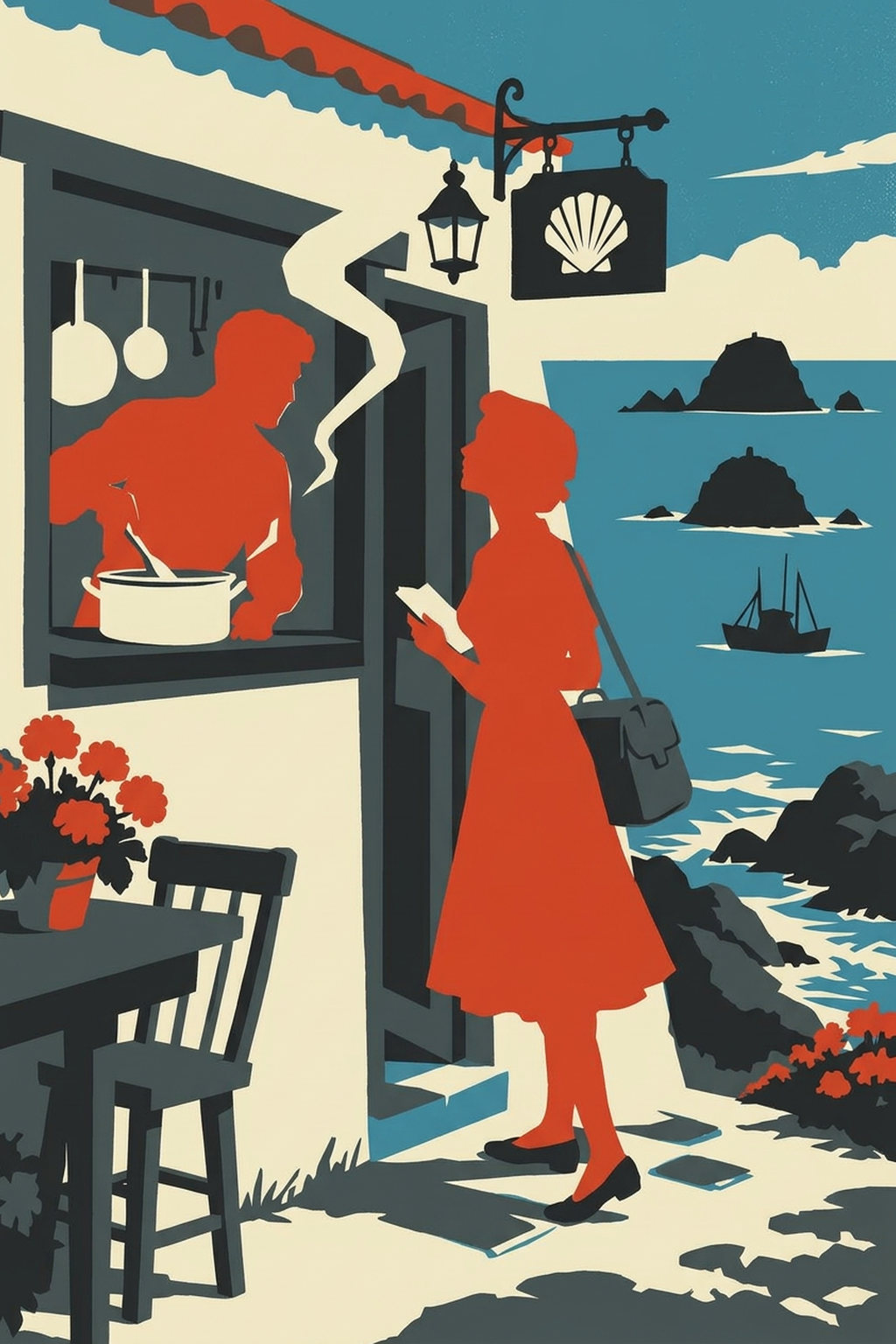
The Recipe for Homecoming
In a harbor tavern on the Galician coast, Roi Fontán cooks in his grandfather's cast-iron pan and hides the bank's letters. One rainy afternoon, old Antón Rivas slaps a magazine on the counter bearing Lidia Salgado's byline: she's back in town, supposedly to write about the Sisargas shipwrecks for a Madrid paper, and she asks for table six. A single review from her could save the tavern or turn it into something else, and Antón knows why she really came.