The Bread of Daybreak
~4 min · 815 words
The next morning broke under a sky of blue glass and clean frost. Across the slate roofs of Montecanela, the snow glittered like coarse salt in the first light. The calm was shattered before noon by the clatter of six armed riders and a black carriage bearing the imperial eagle, which pulled up beside the fountain in the square.
Steward De la Riva stepped down from the carriage footplate bundled in northern sable furs. In his gloved grip he held a crimson velvet folio bearing the lead chancery seal. Two foot-guards in iron cuirasses cleared a path through townspeople who gathered in tight, watchful silence before the bakery entrance.
"Auditor Ledesma," the steward roared as he shoved open the bakery door. "I was forced to navigate three frozen switchbacks because your sanction dispatch failed to reach my camp. I assume the distress warrant seizing this mill and its grain reserves is drafted, sealed, and primed for immediate execution."
Eric emerged from the rear bakehouse. He wore his regulation blue coat, brushed clean of morning dust, yet on his right collar remained a small, defiant smudge of white flour he had made no effort to conceal. Beside him stood Maya, holding a long ashwood peel laden with six golden loaves whose crisp crusts hummed with baking heat.
"The audit is complete, Lord Steward," Eric answered, producing a folded sheet of parchment stamped with his own official commission seal. "And my legal findings are definitive."
De la Riva sneered with greasy satisfaction, flashing teeth stained with pipe leaf.
"I knew the chancery school did not breed soft-hearted clerks. Hand over the execution writ. We shall proceed to padlock the mill sluice gates."
"I'm afraid you have misread my conclusions, my lord," Eric said, with a calm that carried through the shop and into the crowded street. "I have audited this establishment's accounts back to the founding of the communal charter. Section fourteen of the Royal Charter of the Four Hearths states quite clearly that any bakehouse supplying free bread without interruption to the valley's elderly and orphans enjoys perpetual fiscal immunity, and expressly forbids any seizure of its milling or its grain."
The steward’s sneer withered instantly.
"That obsolete charter lapsed under the administrative reform of the late sovereign, you insolent clerk."
"Charters do not lapse while the communal hearth remains alight, sir." Maya stepped forward, fixing her clear hazel gaze upon the nobleman. "And this oven has burned through two hundred winters without failing a single day. If you wish to extinguish it, you will have to explain your reasons to every free householder in this valley."
"There are statutes drafted solely to extort coin, and there are ancient charters that exist only to shield honest folk," Eric added. "My report was dispatched at daybreak by express courier directly to the High Council in Burgos. If you lay hands upon one grain bag, you will answer for official extortion before the sovereign bench."
De la Riva clenched his jaw until the tendons stood out in his neck. He looked at the crowd: blacksmiths in leather aprons, orchard women with hoes and shepherds with crooks closing a ring around his guards without giving a step. He understood that written law, when it meets people who are not afraid, turns into wet ash.
"You will pay for this treason, Ledesma," the steward hissed, wheeling on his boot heel in a swirl of sable fur. "You will never step foot inside a court of audit again."
The black carriage departed at a reckless gallop down the valley road, throwing up frozen plumes of roadside drift. In the square, the held breath of the crowd broke into ringing applause as Maya hoisted the first golden loaf and broke it into four steaming quarters to share among the neighbors.
Eric lingered near the doorway, looking down at his unchained hands. The loss of his imperial commission was an accomplished fact; his family's debt would linger, but for the first time in ten years, his chest felt unclenched.
Maya stepped beside him, carrying a crust of warm, fragrant bread in her hand.
"You find yourself unemployed, Master Auditor," she remarked with a soft, affectionate tilt of her lips.
"So it appears," he conceded, looking into her eyes with a calm that astonished him. "Though I imagine somewhere in this province there is need for a clerk who understands the honest bookkeeping of a free mill."
"In this bakehouse we happen to require a master of accounts who does not flinch at flour dust," Maya said, extending the loaf. "And who knows how to rise at four in the morning."
Eric took the warm bread, and instead of withdrawing, he closed his fingers over Maya’s. The heat of the dough and the warmth of their skin merged into a single unspoken pledge.
"Four o'clock sharp, Maya. Not a minute later."
End of Episode 4 · of 4
The Bread of Daybreak
Did this episode captivate you?
Invite other readers or create a typographic quote card with your favorite lines.
Read next
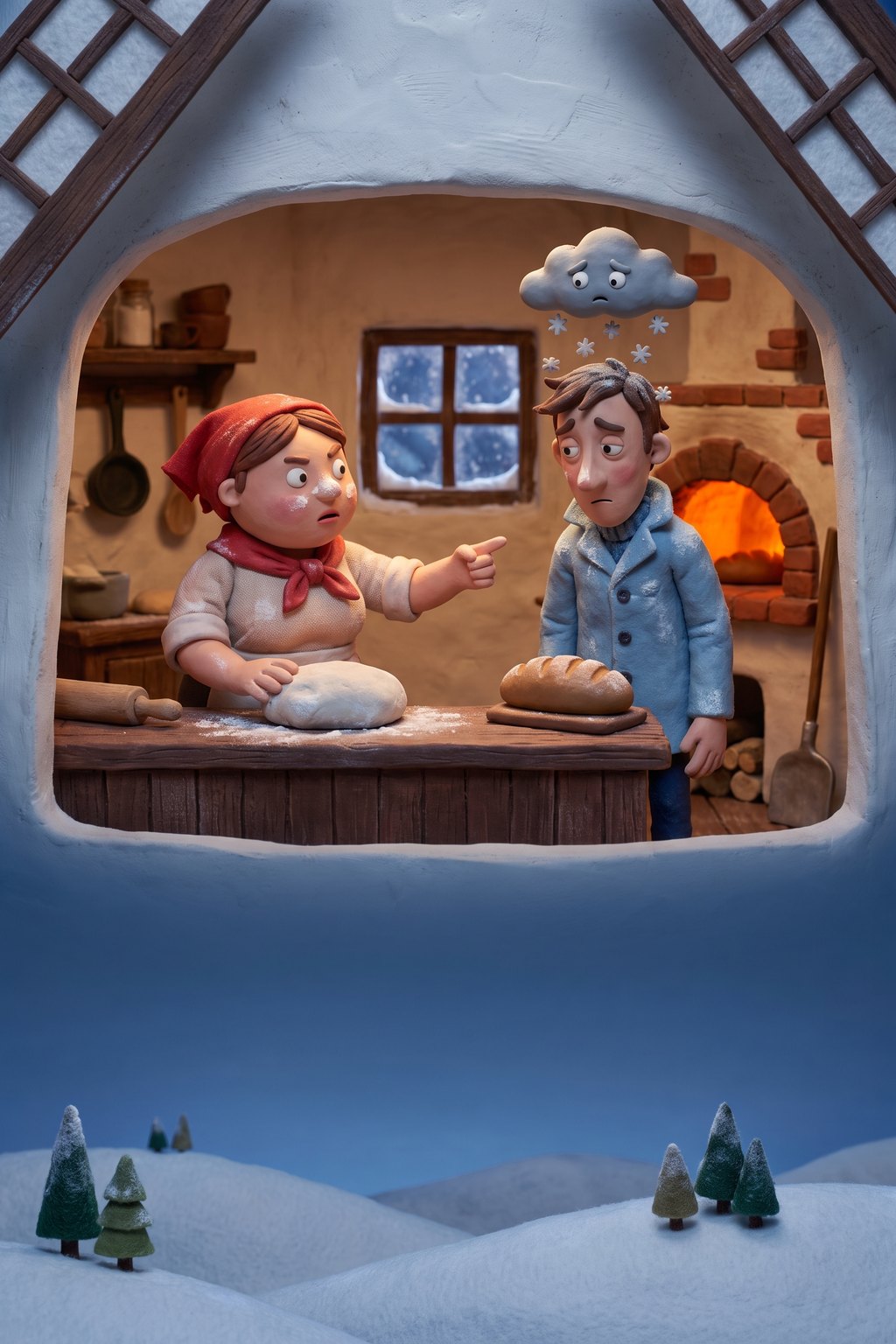
The Baker of the North Wind
When an unseasonal blizzard sweeps down from the glaciated peaks of Montebruno and coats the gorge's barley harvest in frost, panic grips the mountain villages. Clara, the valley's most stubborn baker, refuses to surrender to the creeping cold, setting out for the abandoned white windmill where her forebears once baked hearth-bread for neighboring hamlets. Yet upon the frozen threshold she finds not merely frosted grain sacks, but Lucian: the imperial chancellery meteorologist whose clumsy warding of the southern highway steered the polar gale directly into northern fields. Bound by shared guilt and the dwindling warmth of a single wooden kneading trough, the two must unlock the ancient recipe of ember-bread to awaken the first of the valley's four hearthstones before winter seals the pass forever.